How Autonomous Tech and EV Platforms Are Reshaping the Auto Industry
As tech giants rewrite the rules of autonomous performance, traditional automakers are restructuring their strategies to survive.
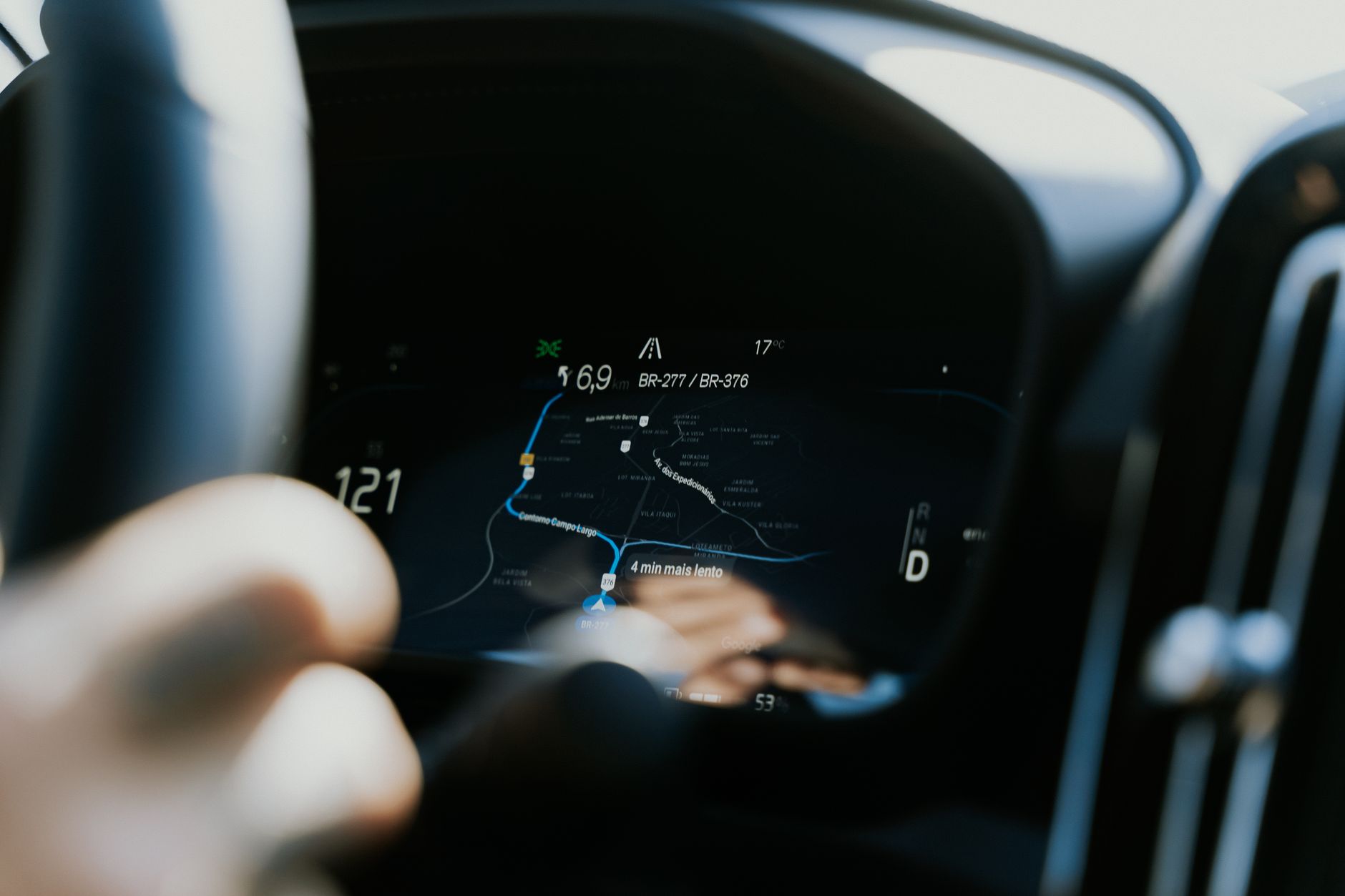
As technology giants rewrite the rules of autonomous performance, traditional automakers are fundamentally restructuring their long-term strategies to survive in a rapidly shifting market.
The Dawn of Autonomous Performance
When discussing the intersection of consumer technology and automotive engineering, the conversation has definitively shifted from dashboard software to fundamental vehicle control. According to reporting from Road & Track, the Chinese electric vehicle manufacturer and technology giant Xiaomi recently shattered expectations at the world's most demanding test track: the Nürburgring.
The company's YU7 GT, an all-electric SUV, completed a lap of the famously unforgiving Nordschleife circuit in just 10:29.5. What makes this milestone historic is not merely the time itself, but the method of execution. The vehicle successfully navigated all 73 corners of the notoriously difficult German track without a human driver behind the wheel.
This achievement signals a broader trend within the global automotive technology sector. Technology companies are no longer content simply supplying infotainment screens or basic sensor suites to legacy automakers; they are building the vehicles themselves and pushing the absolute boundaries of what autonomous systems can handle. Proving ground tests like a driverless Nürburgring lap serve as highly visible, undeniable demonstrations that technology firms are rapidly closing the mechanical engineering gap while simultaneously taking the lead in the race toward fully autonomous consumer vehicles.
Completing a high-speed track run requires a complex symphony of thermal management, instant torque vectoring, and real-time spatial mapping. For a technology company to achieve this on a circuit that regularly challenges professional human drivers illustrates how deeply software and silicon are now embedded in modern automotive performance.
Ford's Formula 1-Inspired Strategy
While newer technology-first companies focus heavily on autonomous halo projects, legacy American automakers are attempting to solve a fundamentally different technological hurdle: consumer affordability. The transition to battery electric vehicles has long been hampered by high entry prices, but Ford is taking an unconventional engineering approach to lower these costs.
According to Autocar, Ford is utilizing a dedicated "skunkworks" engineering team—a specialized, highly autonomous research and development group—to build a completely new, affordable EV platform. Drawing direct influence from Formula 1 engineering principles, which historically emphasize extreme aerodynamic efficiency and lightweight packaging, this platform aims to dramatically reduce the cost of battery-powered transportation without sacrificing range.
The initial results of this program are already materializing. A landmark $30,000 electric pickup truck utilizing this architecture has begun road evaluations in the United States. Achieving a $30,000 price point for a capable electric pickup would represent a massive breakthrough in a market where the average new vehicle transaction price is substantially higher.
However, the technology is designed with global flexibility in mind, not just the American market. Autocar notes that Ford has heavily hinted at bringing these highly efficient, affordable electric vehicles to the United Kingdom and broader European markets to complement its recently revamped regional line-up.
The Push for High-Margin Flagships
Not all legacy automakers are chasing the affordable electric vehicle market. Some prestige brands are actively moving in the opposite direction, utilizing exclusive technology to extract significantly more revenue from a smaller number of sales.
According to Car and Driver, Porsche CEO Michael Leiters has outlined a corporate strategy focused heavily on increasing profitability, explicitly despite a noted downturn in overall production and sales volume. Rather than slashing prices or introducing entry-level models to move more inventory, Porsche intends to lean heavily into its most lucrative automotive segments.
This strategy suggests the imminent arrival of more flagship models and highly profitable special editions. By focusing on the upper echelon of the market, Porsche aims to insulate itself from the intense, margin-destroying price wars currently raging in the mainstream EV sector. It is a playbook that acknowledges a difficult truth for luxury manufacturers: when overall market volume drops, the safest financial harbor is prioritizing customers who are immune to broader economic headwinds.
This dual-track industry evolution—where massive companies like Ford push for affordable, high-volume architectural platforms while premium brands like Porsche retreat to high-margin exclusivity—highlights the immense financial pressure automakers face. The capital required to fund research and development for next-generation platforms is staggering, forcing companies to choose a distinct lane to remain viable.
The Casualties of Technological Transition
Funding the multi-billion-dollar shift toward electrification, software-defined vehicles, and autonomous capability means traditional car manufacturers are being forced to make ruthless decisions about their heritage models. Nostalgia is no longer a sufficient business case for low-margin or highly niche vehicles.
This reality is playing out across multiple established brands. Motor1 reports that Mitsubishi, despite officially viewing the legendary Lancer Evolution as a company "treasure," has admitted it is simply not in a financial or strategic position to revive the beloved sports sedan. The massive capital required to engineer a new internal combustion or hybrid performance sedan from scratch cannot be justified when those exact same resources are desperately needed for future-facing, high-volume crossover technologies.
Similarly, the traditional station wagon continues to face an existential threat globally. According to another report from Motor1, companies like Hyundai are openly discussing the fading relevance of wagons, and the reasoning extends beyond simple consumer preference. While declining demand plays a role, the physical realities of modern vehicle architecture are also to blame.
As automakers streamline their global portfolios to focus on highly aerodynamic EVs, the classic low-slung wagon shape is being phased out. Crossovers and SUVs offer a taller floorpan, making it significantly easier for engineers to package large, heavy battery arrays without compromising passenger cabin space. The transition to electric propulsion is quietly dictating the physical shape of the vehicles we drive.
Navigating the New Mobility Landscape
For consumers both in the United States and abroad, this convergence of advanced technology and traditional manufacturing represents a total reshaping of the automotive market. The vehicles of the near future will be defined by their processing power and battery chemistry just as much as their mechanical underpinnings.
The global automotive sector is undergoing a profound polarization. At one end, aggressive new entrants are proving that the barrier to entry for high-performance, autonomous capable vehicles is falling. At the other end, legacy automakers are either stripping away costs to achieve mass-market EV adoption or abandoning volume entirely to sell high-margin luxury flagships.
As the industry presses forward, the traditional middle ground is rapidly disappearing. Enthusiast models like the Lancer Evolution and practical mainstays like the station wagon are being sacrificed to fund a future defined by $30,000 electric pickups and driverless Nürburgring laps. The modern auto industry is no longer just about building transportation; it is about surviving the most expensive technological transition in manufacturing history.
Key Takeaways
- Technology companies are successfully proving advanced autonomous capabilities in extreme conditions, highlighted by Xiaomi's driverless Nürburgring lap.
- Legacy automakers like Ford are prioritizing Formula 1-inspired engineering to develop hyper-affordable EVs, targeting a landmark $30,000 price point for the US and European markets.
- Luxury brands such as Porsche are countering production downturns by focusing entirely on high-margin special editions and flagship models rather than chasing volume.
- Traditional internal combustion enthusiast models and station wagons are being discontinued as automakers redirect capital toward electric and software-defined vehicle development.
Frequently asked questions
Did Xiaomi set a lap record at the Nürburgring?
Yes. The Xiaomi YU7 GT electric SUV successfully navigated the 73-corner Nordschleife circuit in 10:29.5 without a driver behind the wheel, showcasing highly advanced autonomous capabilities.
How is Ford attempting to lower the cost of electric vehicles?
Ford is using a specialized 'skunkworks' team to develop a new EV platform influenced by Formula 1 engineering. The goal is to maximize efficiency and lower costs, with a $30,000 pickup currently testing in the US.
Why are traditional station wagons and sports sedans being discontinued?
Automakers like Hyundai and Mitsubishi are phasing out low-margin, niche vehicles like wagons and the Lancer Evolution because they cannot justify the development costs. Capital is instead being redirected toward high-volume SUVs and EV platforms, which are better suited for modern battery packaging.
- 01Car and Driver: Porsche's CEO Wants More Profits Despite Production Downturn
- 02Autocar: Ford could bring F1-inspired 'skunkworks' EVs to Europe
- 03Motor1: 'There’s a Reason We Don't Talk About Them Much:' The Case Against Wagons
- 04Road & Track: Xiaomi YU7 GT Makes Nurburgring History, Runs 10:29.5 Lap Without a Driver
This editorial article was written by US News Desk's editorial desk using current reporting from the publishers above. All facts were grounded against these sources.