Beyond Range Anxiety: How Science, Tariffs, and Hydrogen Are Rewiring the American EV Market
As solid-state chemistry breakthroughs clash with geopolitical trade barriers, the US automotive sector is entering a pivotal, fractured new era.
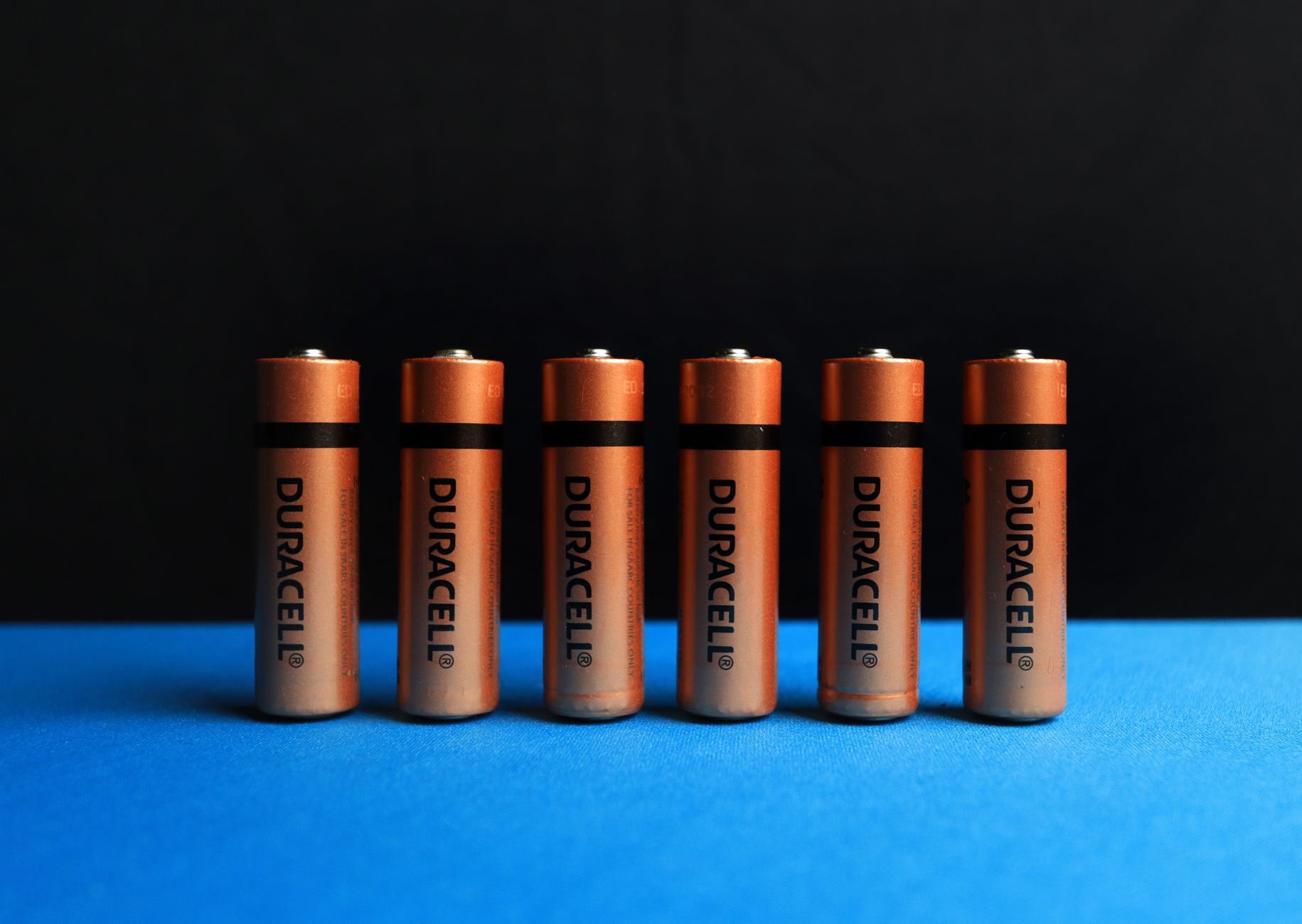
As solid-state chemistry breakthroughs clash with geopolitical trade barriers, the US automotive sector is entering a pivotal, fractured new era.
The story so far
The American electric vehicle landscape is currently caught in a complex tug-of-war between profound scientific advancement and tightening geopolitical boundaries. On the consumer front, range anxiety continues to dictate the market. As automotive publications like Car and Driver have recently highlighted in their rigorous testing of the longest-range electric vehicles, the race to squeeze every last mile out of traditional lithium-ion architecture remains the primary obsession of both automakers and prospective buyers. Consumers want to drive further, charge faster, and eliminate the psychological barrier of being stranded between charging stations.
Simultaneously, a major technological breakthrough has emerged from the academic sector that could render these incremental lithium-ion improvements obsolete. As InsideEVs has reported, researchers at the Massachusetts Institute of Technology (MIT) have identified a viable solution to the most persistent flaw sabotaging the development of solid-state batteries. For years, solid-state technology has been plagued by the formation of dendrites—microscopic, tiny metal spikes that grow inside the battery during charging, eventually puncturing the separator and causing catastrophic short circuits. The MIT team's newly discovered method to prevent these dendrites from forming could finally unlock commercial scalability for a technology long considered the holy grail of automotive engineering.
Yet, while American academic institutions are pushing the boundaries of physical chemistry, the American consumer market is facing artificial constraints driven by international trade policy. According to Road & Track, the highly anticipated Polestar 4 SUV is set to make its market debut on September 2 for the 2027 model year. However, this wagon-like electric vehicle, praised for its innovative design—including the controversial omission of a traditional rear window—will likely be unavailable to buyers in the United States. Furthermore, while the industry consolidates around battery-electric paradigms, legacy automakers like BMW are refusing to abandon alternative fuels. The German automaker is pressing forward with the 2028 BMW iX5 Hydrogen, arguing that long driving range, rapid refueling times, and broader energy storage solutions necessitate a diversified approach to the post-combustion era.
Why this matters
The simultaneous convergence of solid-state breakthroughs, geopolitical market lockouts, and persistent hydrogen investments highlights a fundamental truth: the green transition is not a straight line, but a deeply fragmented global race. The MIT breakthrough regarding dendrite suppression is not merely an academic footnote; it is a critical unlock for an industry that has poured billions of dollars into overcoming the physical limitations of liquid electrolytes. A commercially viable solid-state battery would offer significantly higher energy density, drastically lower fire risks, and lighter vehicle weights. However, the Polestar 4's exclusion from the US market—stemming from complex supply chain origins and shifting tariff landscapes—demonstrates that even if the technology exists globally, American consumers may be structurally shielded from accessing it, creating a unique micro-climate of automotive isolationism.
Editorial analysis
For the South Asian diaspora—a demographic heavily represented in America's engineering, technology, and clean-energy sectors—this moment represents a fascinating pivot from software-driven innovation to hard-tech industrial policy. Over the last decade, the Silicon Valley narrative dictated that electric vehicles were essentially computers on wheels, a paradigm dominated by code, over-the-air updates, and user interfaces. The current news cycle, however, signals a return to the grueling, capital-intensive realities of materials science and geopolitical maneuvering. The discovery at the Massachusetts Institute of Technology underscores that the next trillion-dollar unlock in the climate sector will not be found in a better app ecosystem, but in the microscopic manipulation of metal ions. Defeating dendrites is a monumental triumph of applied physics, and it shifts the industry's center of gravity back toward advanced manufacturing.
However, the Polestar situation reveals the heavy hand of protectionism that is currently reshaping American commerce. Polestar, closely tied to its Chinese parent company Geely, finds itself on the wrong side of the increasingly impenetrable wall the United States is building around its domestic auto industry. The broader push for supply chain sovereignty means that the US government is willing to delay consumer access to excellent, globally available vehicles in order to incubate domestic battery and automotive manufacturing. For industry observers, this presents a glaring paradox: America is funding incredible academic research at institutions like MIT, yet simultaneously building a walled garden that could insulate its domestic automakers from the brutal, price-reducing competition of the global market. The rest of the world will soon be driving advanced, relatively affordable EVs like the Polestar 4, while Americans are left waiting for domestic supply chains to catch up to the protective tariffs.
In this context of battery supremacy and trade wars, BMW's stubborn commitment to the 2028 iX5 Hydrogen is both a strategic hedge and a technological statement. The automotive industry is historically prone to herd mentality, currently manifesting as an absolute consensus around battery-electric vehicles (BEVs). BMW's refusal to yield on hydrogen technology acknowledges a reality that many pure-BEV evangelists ignore: grid capacity, mineral scarcity, and the specific demands of heavy-duty or long-haul transport may not be fully solved by solid-state batteries alone. Hydrogen fuel cells offer a distinct advantage in rapid refueling and cold-weather performance. By maintaining this parallel track, BMW is positioning itself for a future where energy storage and mobility solutions are diverse rather than monolithic, providing a crucial safety net if the mass commercialization of solid-state batteries encounters unforeseen manufacturing roadblocks.
What to watch next
For professionals tracking the intersection of technology, policy, and mobility, the next 24 to 36 months will be critical. The transition from laboratory success to mass-market reality is notoriously difficult, and the global regulatory environment is shifting rapidly.
- Track the commercialization timelines and patent filings emerging from the MIT solid-state research to see which major automakers or battery suppliers (such as Panasonic or LG Energy Solution) license the dendrite-suppression technology.
- Monitor the September 2 rollout of the 2027 Polestar 4 in international markets, paying close attention to how the company navigates—or fails to navigate—future entry into the US market amid evolving tariff structures and software security regulations.
- Follow BMW's infrastructure partnerships ahead of the 2028 iX5 Hydrogen launch, specifically looking for investments in green hydrogen production facilities and heavy-duty transport corridors that could make fuel-cell passenger vehicles viable.
For global readers
For observers in the Global South, particularly in India, the American fixation on extracting maximum range from three-ton luxury SUVs presents a stark contrast to the realities of a pragmatic mass-mobility transition. While the US market debates the geopolitics of $60,000 electric wagons and waits for the perfection of solid-state chemistry to power massive vehicles, India's EV revolution is already happening on two and three wheels. The Indian strategy bypasses the luxury range-anxiety dilemma entirely, focusing instead on hyper-localized battery manufacturing, battery swapping infrastructure, and lightweight scooters that serve the immediate economic needs of a billion people. The US is fighting a high-end technological and geopolitical war; India is executing a volume-driven, localized logistics overhaul. For the global diaspora, bridging these two distinct philosophies will be key to understanding the future of global transportation.
The bottom line
The American electric vehicle market is no longer just a technological arms race; it has become a complex geopolitical chessboard. While breakthroughs in solid-state chemistry promise to eventually eradicate range anxiety, tightening trade borders and alternative fuel hedges by legacy automakers prove that the road to a post-combustion future will be anything but uniform.
Key Takeaways
- MIT researchers have discovered a critical solution to prevent dendrites (microscopic metal spikes) from short-circuiting solid-state batteries, potentially accelerating their commercial viability.
- Despite globally available EV options, the highly anticipated Polestar 4 SUV will likely remain unavailable to American buyers due to shifting US trade policies and supply chain protectionism.
- American consumers continue to prioritize long-range electric vehicles, relying heavily on incremental improvements to traditional lithium-ion architectures while waiting for solid-state technology.
- Legacy automakers like BMW are resisting a battery-only future, pushing forward with the 2028 iX5 Hydrogen to hedge against grid limitations and battery mineral scarcity.
- The US strategy of building high-end, long-range EVs contrasts sharply with emerging markets like India, which are rapidly electrifying through affordable two- and three-wheel mass mobility solutions.
Frequently asked questions
What is a solid-state battery and why are dendrites a problem?
A solid-state battery uses a solid electrolyte instead of the liquid or polymer gel found in conventional lithium-ion batteries, allowing for greater energy density and safety. However, they are prone to forming dendrites—tiny metal spikes that grow during charging and can puncture the battery, causing short circuits. Recent MIT research aims to solve this.
Why is the Polestar 4 SUV not coming to the United States?
While the Polestar 4 is launching globally for the 2027 model year, its ties to Chinese parent company Geely make it vulnerable to aggressive US tariffs and protectionist trade policies aimed at securing domestic automotive supply chains, effectively pricing or locking it out of the American market.
Why is BMW continuing to develop hydrogen fuel cell vehicles?
Despite the industry consensus around battery-electric vehicles, BMW is developing vehicles like the 2028 iX5 Hydrogen as a strategic hedge. Hydrogen offers rapid refueling, excellent cold-weather performance, and serves as an alternative energy storage solution that does not rely as heavily on constrained battery mineral supply chains.
- 01Car and Driver: Longest-Range Electric Cars We've Ever Tested
- 02Road & Track: Polestar 4 SUV to Hit the Market September 2, Just a Little Too Late for Americans
- 03InsideEVs: This Flaw Keeps Sabotaging Solid-State Batteries. Scientists Found A Solution
This editorial article was written by US News Desk's editorial desk using current reporting from the publishers above. All facts were grounded against these sources.