Digital Identity in Crisis: How Instagram Redefines Celebrity Consent
As public figures rely on Instagram for profound announcements, Meta’s latest synthetic tools threaten to blur the lines of digital ownership.
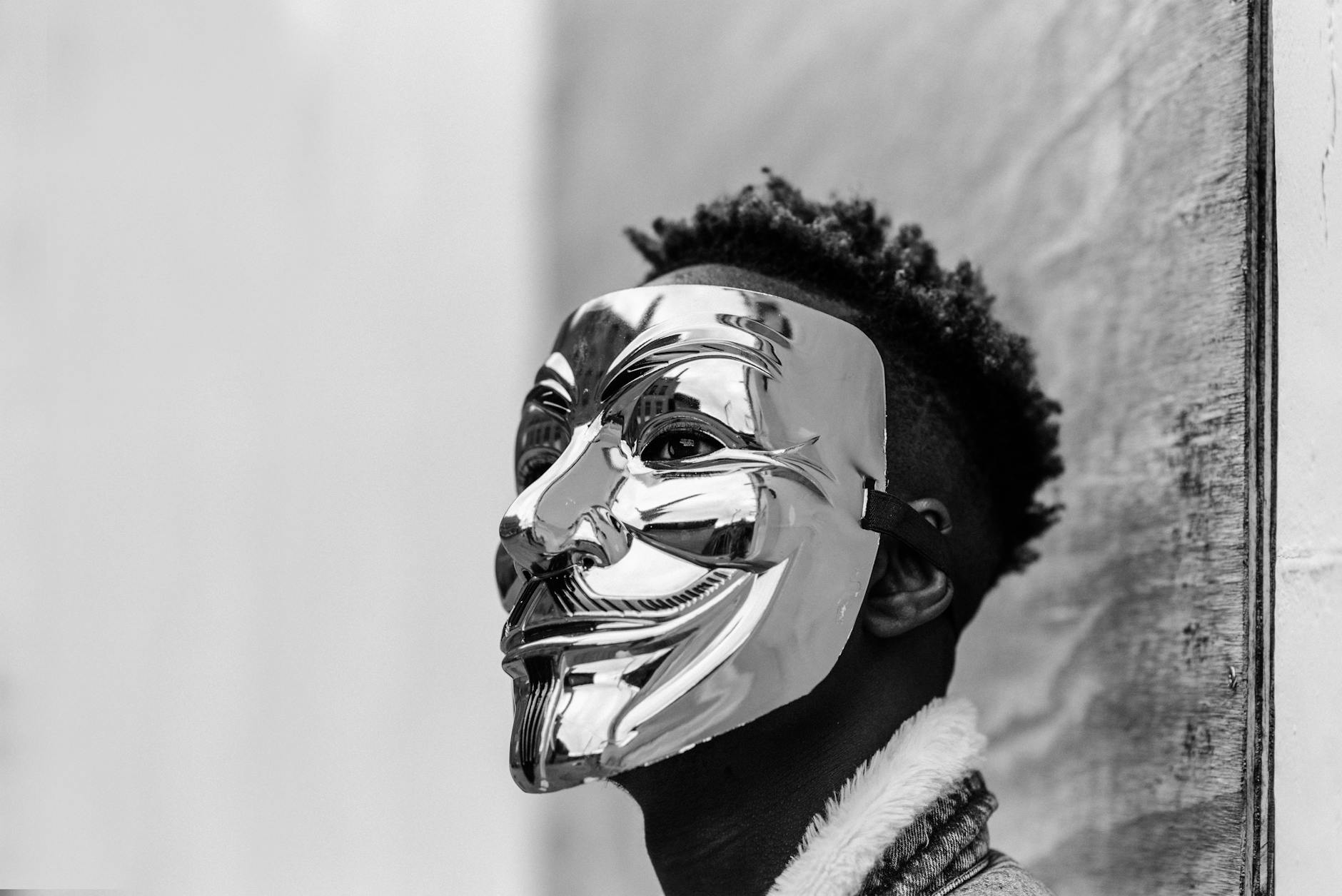
As public figures rely on Instagram for profound announcements, Meta’s latest synthetic tools threaten to blur the lines of digital ownership.
The story so far
Instagram continues to solidify its role as the definitive public record for modern celebrity culture, functioning simultaneously as a promotional megaphone and an intimate confessional. In early July 2026, the platform served as the primary conduit for both profound grief and major industry announcements. As reported by ABC News, the surviving members of the pop group G.R.L. utilized the platform to confirm the tragic passing of their bandmate, thirty-seven-year-old Lauren Bennett. Bennett, widely recognized for her soaring vocal contributions to the global smash hit 'Party Rock Anthem,' leaves behind a complex legacy in the music industry. Her peers bypassed traditional press syndicates, choosing instead to communicate directly with mourning fans through a medium that allowed for immediate, unvarnished emotional resonance.
Just a day later, veteran character actor Walton Goggins leveraged his highly curated personal account to break more triumphant news. As reported by Polygon, Goggins confirmed that filming for the critically acclaimed third season of the post-apocalyptic television series Fallout had officially commenced. The stark contrast between these two monumental announcements—one steeped in profound human tragedy and the other in commercial triumph—highlights just how deeply embedded the application has become in the modern socio-cultural fabric. It is no longer just a networking site; it is the primary historical ledger for the celebrity class, a direct-to-consumer pipeline that has functionally replaced the traditional Hollywood publicist.
Yet, the fundamental nature of how images and identities are shared on the platform is undergoing a radical, unprecedented transformation. According to technology publications The Verge and Engadget, Meta’s newly established Superintelligence Labs division has officially rolled out the Muse Image system. This advanced computational tool, now active across Instagram and WhatsApp, allows users to synthesize completely fabricated photos by actively using other Instagram accounts as prompt inputs. Rather than simply creating standalone fictional art from text, the system can systematically extract the likeness of existing users and render them into entirely new, synthetic contexts without their explicit, per-use permission.
This technological leap arrives at a precarious moment for the broader entertainment sector. During a recent panel at the Bentonville Film Festival, covered extensively by Variety, leading independent producers detailed the mounting financial limitations and systemic hurdles facing creators today. As the traditional studio infrastructure continues to consolidate and budgets strictly tighten, artists and independent producers are increasingly reliant on direct audience engagement through platforms like Instagram to market their work, making the sudden alteration of the platform's visual reality a highly disruptive development.
Why this matters
The introduction of the Muse Image system represents a profound shift in the mechanics of digital consent, transforming a user's likeness from a protected personal asset into raw material for public consumption. Meta currently commands an ecosystem of over 3.2 billion daily active users across its sprawling family of applications. When a platform of this unprecedented, monopolistic magnitude introduces a feature that permits the synthetic reproduction of real individuals, it fundamentally rewrites the social contract between the public, the celebrity class, and technology conglomerates. For public figures whose livelihoods depend entirely on carefully curated digital personas and brand partnerships, the sudden inability to control the environments and contexts in which their faces appear introduces severe, potentially existential reputational and commercial risks. Furthermore, it accelerates the broader cultural anxiety regarding truth and authenticity in the modern era, establishing a treacherous paradigm where visual evidence can no longer be implicitly trusted.
Editorial analysis
For observers within the global South Asian diaspora—many of whom are deeply integrated into the very Silicon Valley engineering ecosystems developing these technologies—the juxtaposition of human tragedy and algorithmic synthesis presents a striking ethical paradox. Culturally, within South Asian communities, the sanctity of personal reputation, public image, and community standing holds immense, often foundational, weight. We are now witnessing the ultimate, unfettered commodification of human identity, engineered by the very companies that employ significant portions of our diaspora workforce.
When the members of G.R.L. shared the news of Lauren Bennett’s untimely death, they did so with a raw, unfiltered vulnerability that relies entirely on the fundamental assumption of authenticity. The global audience inherently understands that the image on the screen corresponds to a genuine human reality, a shared moment of mourning. However, by introducing a computational tool that allows anyone to seamlessly prompt the likeness of another user into a fabricated scenario, Meta is systematically dismantling that core foundation of visual trust. If seeing is no longer believing, the foundational currency of the internet—which relies on authentic human connection and verified reality—is severely compromised, leaving users to navigate a perpetual state of visual skepticism.
The implications for the concept of digital sovereignty are particularly alarming. Historically, the legal framework surrounding the 'right of publicity' in the United States has protected individuals from the unauthorized commercial exploitation of their name, image, or likeness. Yet, the Muse Image model operates in a nebulous gray area, empowering everyday users rather than corporate advertisers to manufacture these synthetic scenarios for private amusement or public virality. If a user can type an Instagram handle into a prompt box and instantly produce a photorealistic image of a celebrated actor or a private citizen engaged in a compromising or entirely fabricated act, the legal and emotional burdens are entirely shifted onto the victim. The technology outpaces the legislative guardrails, leaving individuals to police the endless, unsearchable expanse of the internet for algorithmic impersonations of themselves. For the vast majority of users who lack the financial resources of a Hollywood studio, this policing is functionally impossible.
Moreover, this development must be viewed alongside the ongoing economic realities of the entertainment industry. The independent producers speaking at the Bentonville Film Festival highlighted the critical importance of festivals and direct audience engagement in an era of tightening budgets. Independent cinema relies heavily on the authentic connection between creators, actors, and their grassroots supporters. If platforms like Instagram become saturated with synthetic, fabricated imagery, the resulting noise threatens to drown out authentic artistic expression. The democratization of content creation is often heralded as a triumph by technology executives, but when that democratization involves the non-consensual harvesting of human likeness, it risks cannibalizing the very creative industries it claims to support. The true cost of this innovation will not be borne by the executives at Meta, but by the artists, public figures, and everyday users whose digital identities are suddenly up for public grabs.
What to watch next
As the deployment of this technology expands globally, several key developments will dictate the future landscape of digital identity:
- The response from major entertainment guilds: Following the bruising labor disputes of recent years, monitor how SAG-AFTRA and the Writers Guild of America react to the Muse Image tool, specifically whether they demand immediate, legally binding mechanisms for their members to opt-out of the platform's prompt database.
- Updates to Meta’s terms of service: Watch for subtle, quiet updates to the end-user license agreements across WhatsApp and Instagram that may broadly waive a user's right to pursue litigation regarding algorithmic impersonation or the non-consensual use of their likeness by third-party accounts.
- State and Federal legislative action: Track the progress of the heavily debated NO FAKES Act or similar bipartisan legislation in the United States Congress, which seeks to establish a robust federal framework to protect voice and visual likeness from unauthorized algorithmic replication.
- Changes to independent festival guidelines: Pay close attention to how organizations like the Bentonville Film Festival adapt their submission rules regarding the utilization of synthetic likenesses in independent productions, potentially setting the standard for grassroots artistic integrity.
For global readers
For audiences in India and the broader diaspora, the American struggle with digital likeness mirrors an intensifying legal battle within the Indian subcontinent, albeit with distinct cultural nuances and a much higher degree of judicial urgency. Following recent controversies involving synthetic media in political campaigns, the Delhi High Court has emerged as a surprisingly aggressive defender of personality rights, granting sweeping injunctions to safeguard Bollywood icons like Amitabh Bachchan and Anil Kapoor from unauthorized commercial duplication and synthetic voice cloning. While the United States relies heavily on a patchwork of state-level privacy statutes and platform self-regulation, India’s judicial system has demonstrated a strong willingness to intervene proactively to shield public figures from technological exploitation. The Indian diaspora, which bridges the gap between Silicon Valley's rapid product deployment and the subcontinent's distinct cultural priorities, finds itself at the epicenter of this philosophical clash. If Indian courts continue to rigorously defend the visual autonomy of citizens, it may force multinational technology firms to adopt more ethical, consent-driven architectures globally, rather than treating international markets as mere testing grounds for unrestricted algorithmic synthesis.
The bottom line
The evolution of Instagram from a simple chronological photo-sharing application into a vast engine for algorithmic synthesis marks the end of digital authenticity as we have known it. While the platform remains a vital space for real human connection—evidenced by the communal mourning of Lauren Bennett and the celebration of Walton Goggins' continuing career—the introduction of the Muse Image system fundamentally compromises the integrity of the individual likeness. As computational technology continuously outstrips legislative regulation, users and creators alike must navigate an internet where their very faces are no longer exclusively their own, but rather a permanent, exploitable resource for the public domain.
Key Takeaways
- Meta has launched the Muse Image system, allowing users to synthesize fabricated photos using real Instagram accounts as source prompts.
- The tool arrives as public figures increasingly rely on Instagram for major life announcements, from the tragic passing of G.R.L.'s Lauren Bennett to Walton Goggins' Fallout updates.
- Independent film producers face mounting financial hurdles, making direct-to-consumer digital platforms more crucial yet highly volatile due to synthetic imagery.
- The traditional right of publicity faces a modern crisis as the burden of policing algorithmic impersonations shifts entirely onto the individual user.
- India's aggressive judicial defense of personality rights stands in stark contrast to the platform-first, deregulated approach currently dominating the United States.
Frequently asked questions
What is the Muse Image tool?
It is a new computational feature from Meta’s Superintelligence Labs that allows users to produce synthetic imagery by using real Instagram accounts as source prompts.
How does this impact celebrity consent?
By allowing users to place the likeness of real individuals into fabricated scenarios without per-use permission, the system fundamentally challenges the right of publicity and personal visual sovereignty.
Are there laws preventing unauthorized digital duplication?
In the United States, protections rely on a patchwork of state-level right-of-publicity laws, while countries like India have seen proactive court interventions to rigorously protect personality rights.
- 01Variety: Producers to Watch Panelists Talk the Rise of Independent Films, Financial Limitations and the Importance of Festivals
- 02ABC News: G.R.L. member and 'Party Rock Anthem' singer Lauren Bennett dies at 37
- 03Polygon: Fallout season 3 starts filming, The Ghoul actor confirms
- 04The Verge: Meta’s new Muse Image model can pull other Instagram users into AI photos
- 05Engadget: Meta's new Muse Image model accepts Instagram accounts as a prompt
This editorial article was written by US News Desk's editorial desk using current reporting from the publishers above. All facts were grounded against these sources.