Power Plays: The Solid-State Battery Breakthrough and America’s Shifting EV Borders
As researchers crack the solid-state battery code, shifting trade barriers threaten to isolate the US electric vehicle market from the rest of the world.
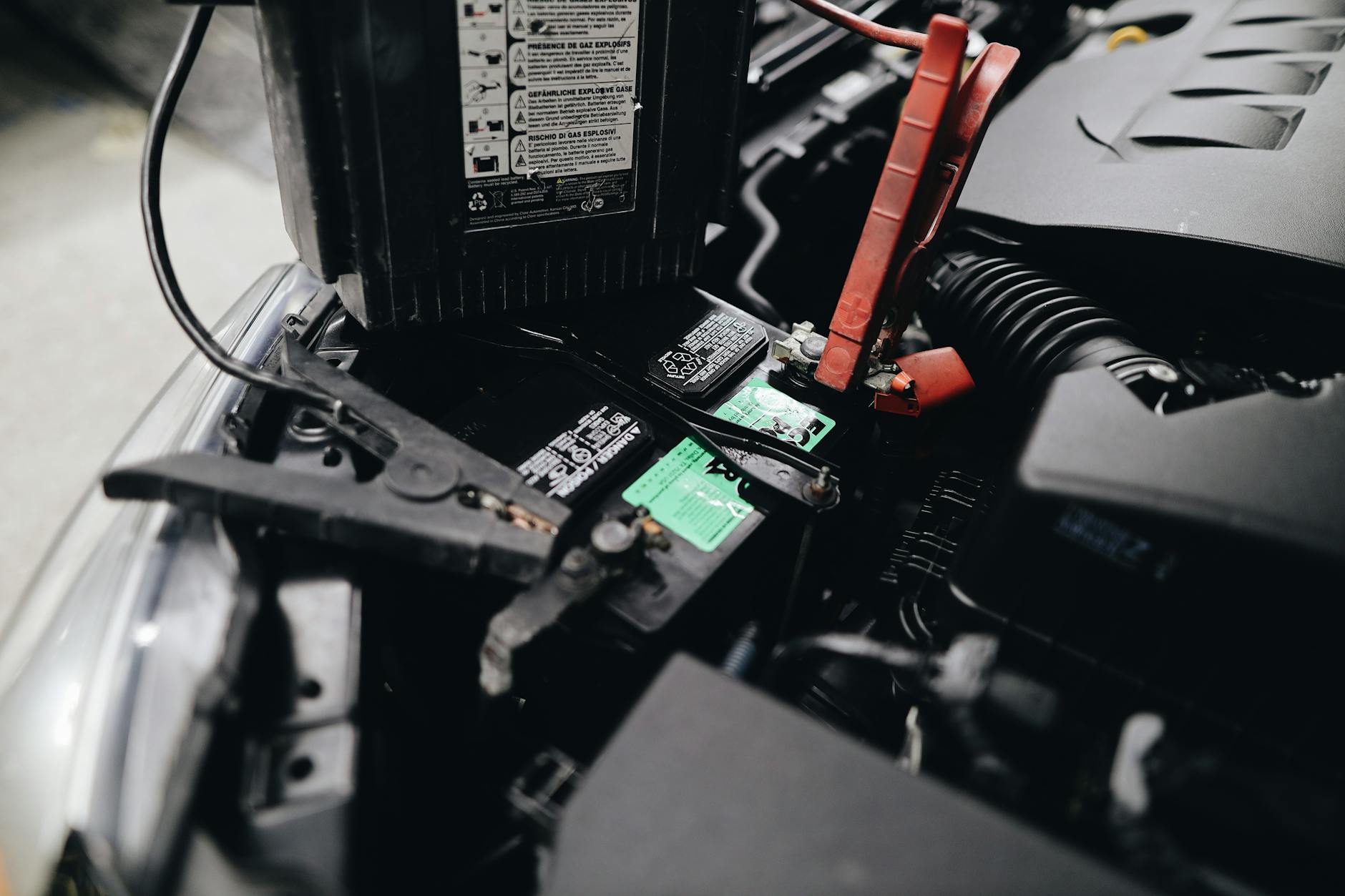
As researchers crack the solid-state battery code, shifting trade barriers threaten to isolate the US electric vehicle market from the rest of the world.
The story so far
The American electric vehicle landscape is currently navigating a profound and contradictory juncture, characterized by soaring technological innovation on one side and increasingly rigid geopolitical borders on the other. For years, the automotive industry has been locked in a relentless arms race to eliminate range anxiety. According to recent comprehensive testing metrics published by automotive authorities, the longest-range electric cars on the market continue to push the physical limits of traditional lithium-ion battery architectures. Yet, the brute-force approach of packing larger, heavier battery modules into consumer vehicles is rapidly approaching its ceiling of diminishing returns.
Now, a critical turning point has emerged from the laboratories of the Massachusetts Institute of Technology (MIT). As recently reported by industry trackers, MIT researchers have successfully identified and engineered a solution to the most persistent flaw plaguing next-generation energy storage: dendrite formation in solid-state batteries. These microscopic, metallic spikes have historically sabotaged solid-state cells by growing through the battery's internal separator, inevitably causing catastrophic short circuits. By engineering a method to suppress these tiny metal spikes, the MIT team has cleared one of the final, most formidable hurdles preventing solid-state technology from leaving the laboratory and entering the commercial manufacturing pipeline.
Simultaneously, however, the practical availability of global electric vehicles in the United States is shrinking. As automakers finalize their global release calendars, shifting supply chain mandates and tariff walls are dramatically reshaping what American consumers can actually buy. A stark example is the upcoming Polestar 4 SUV. Slated to make its highly anticipated market debut on September 2 for the 2027 model year, this innovative electric wagon—celebrated for its unique design that entirely eliminates the traditional rear window in favor of high-definition camera arrays—will be largely inaccessible to American buyers. While the rest of the global market prepares to embrace the Polestar 4, US consumers find themselves structurally locked out of its initial rollout.
Why this matters
The successful mitigation of dendrite formation is not merely an incremental academic victory; it is the linchpin for fundamentally transforming a multi-trillion-dollar global automotive industry. Traditional lithium-ion batteries rely on liquid electrolytes to move ions between the anode and cathode. While effective, these liquid components are inherently flammable, heavy, and limited in their energy-density capacity. A solid-state architecture replaces this liquid with a solid ceramic or polymer electrolyte, drastically reducing fire risks while unlocking the potential to store significantly more energy in a smaller, lighter package. However, the Achilles' heel of this technology has always been the accumulation of lithium metal during the charging cycle, which forms jagged, root-like structures—dendrites—that pierce the solid separator and short-circuit the cell. By solving this microscopic flaw, scientists are paving the way for EVs that could theoretically travel over 600 miles on a single charge and recharge in a matter of minutes, effectively neutralizing the range limitations that currently define automotive testing hierarchies.
Editorial analysis
What we are witnessing is the rapid acceleration of a balkanized global automotive sector. On the scientific front, the United States remains the undisputed heavyweight champion of foundational research and development. The breakthroughs emanating from institutions like MIT underscore a robust, heavily capitalized innovation ecosystem. The ability to achieve successful dendrite mitigation translates to a monumental strategic advantage for American technology firms in the long-term race to commercialize next-generation energy storage. If American startups and legacy automakers can successfully license and scale this solid-state technology, they will fundamentally rewrite the economics of electric transport, dramatically lowering vehicle weight and manufacturing costs while vastly improving consumer safety.
However, this technological supremacy is sharply contrasted by a deeply protectionist trade policy that is inadvertently starving the domestic consumer market of immediate automotive diversity. The saga of the Polestar 4 serves as a potent bellwether for this phenomenon. Polestar, despite its Swedish branding and design ethos, is deeply intertwined with the supply chains of its parent companies, Volvo and China-based Geely. Under the current regime of aggressive US tariffs on Chinese-manufactured vehicles and battery components—designed explicitly to protect domestic manufacturing bases and incentivize local supply chains—vehicles like the Polestar 4 become economically unviable for the American market. The result is a bizarre paradox: American drivers may soon benefit from the most advanced battery chemistries the world has ever seen, but they will have to install them in a narrowing selection of domestically approved, politically sanitized vehicle platforms.
This dynamic highlights the profound trade-offs inherent in the concept of supply chain balkanization. By attempting to build a "fortress EV" economy, US policymakers are forcing a painful transitional period upon consumers. The domestic market is effectively being shielded from global price competition and design innovation, operating under the assumption that long-term domestic security is worth short-term market isolation. The risk, from an editorial perspective, is that by artificially constraining the market, the US might slow down overall EV adoption rates right at the critical moment when early-majority consumers are looking for diverse, affordable, and varied vehicle architectures. If a globally acclaimed SUV is deemed "too late for Americans" solely due to geopolitical supply chain routing, one must question how many other technological and design innovations the US market will miss out on over the next decade.
Furthermore, this isolationist approach impacts the broader lifestyle integration of the automotive industry. We are seeing brands like Porsche collaborate with home interior companies to blur the lines between automotive passion and domestic lifestyle, signaling that cars are increasingly becoming extensions of personal identity and technology ecosystems. If the US market becomes a walled garden, the cultural exchange of automotive design—the cross-pollination of European, Asian, and American engineering philosophies—will inevitably stagnate, leaving American consumers in a technologically advanced but aesthetically and practically limited bubble.
What to watch next
For investors, policymakers, and automotive enthusiasts, the convergence of battery science and trade policy will dictate the next half-decade of industry movement. Key developments to monitor include:
- Commercialization timelines for solid-state cells: Watch for licensing agreements between MIT's research spin-offs and major battery manufacturers (like Panasonic, LG Energy Solution, or American firms like QuantumScape). The transition from a controlled laboratory environment to a gigafactory floor is notoriously capital-intensive and fraught with quality-control hurdles.
- The September 2 global launch of the Polestar 4: Track the initial sales data and consumer reception in European and Asian markets. If the vehicle proves to be a massive commercial success, it will intensify the pressure on US lawmakers to reevaluate trade barriers that keep highly desirable EVs out of American driveways.
- Regulatory responses and localization efforts: Monitor whether foreign automakers with Chinese supply chain ties attempt to circumvent US tariffs by rapidly localizing manufacturing within North American free-trade zones, such as Mexico or the southern United States, to qualify for federal tax credits and market entry.
- Evolving range testing standards: As solid-state technology begins to trickle into high-end prototype vehicles over the next 24 to 36 months, traditional benchmarking—which currently measures the upper limits of lithium-ion capability—will need to completely recalibrate to account for vehicles pushing past the 500- and 600-mile thresholds.
For global readers
For the South Asian diaspora and observers of India's rapidly expanding electric vehicle sector, the American dichotomy offers a critical blueprint and a cautionary tale. India is currently executing a delicate tightrope walk through its Advanced Chemistry Cell (ACC) Production Linked Incentive (PLI) scheme, aggressively courting domestic manufacturing while remaining heavily reliant on imported lithium and technology transfers. The US breakthroughs at institutions like MIT—driven in no small part by the deep bench of Indian engineering talent within the American academic diaspora—demonstrate the value of owning foundational intellectual property. If Indian automakers like Tata Motors and Mahindra can secure early technology transfer agreements for solid-state architectures, India could theoretically leapfrog the entire lithium-ion gigafactory phase, moving directly into safer, hyper-dense battery production tailored for the intense thermal demands of the subcontinent. Conversely, America’s balkanized market serves as a warning; India must ensure its own protectionist policies do not lock Indian consumers out of the global innovation pipeline in the name of domestic self-reliance.
The bottom line
The cracking of the solid-state battery code represents one of the most significant engineering triumphs of the 21st century, promising to permanently erase range anxiety and redefine automotive performance. Yet, as American science breaks down the physical barriers of energy storage, American trade policy is erecting massive geopolitical walls, ensuring that the vehicles powered by tomorrow’s technology will be dictated just as much by political borders as they are by consumer demand.
Key Takeaways
- MIT researchers have achieved a breakthrough in solid-state battery technology by solving the issue of dendrite formation, which causes short circuits.
- Eliminating tiny metal spikes (dendrites) paves the way for commercializing solid-state batteries, which offer vastly superior energy density and safety compared to lithium-ion.
- Global EV platforms like the Polestar 4 SUV are skipping the US market due to shifting supply chain mandates and aggressive tariff walls on foreign-linked manufacturing.
- The US EV market is increasingly balkanized, characterized by world-leading domestic R&D but restricted access to global vehicle models.
- For global observers, particularly in India, the US situation highlights the need to balance domestic manufacturing protectionism with access to global technological innovation.
Frequently asked questions
What is a solid-state battery and why is it better?
A solid-state battery replaces the flammable liquid electrolyte found in traditional lithium-ion batteries with a solid material. This allows for significantly higher energy density, meaning vehicles can travel much further on a single charge while also being substantially safer and less prone to fires.
What are dendrites in battery technology?
Dendrites are microscopic, needle-like structures of metal that can grow inside a battery over repeated charging cycles. In solid-state batteries, they can pierce the internal separator, causing catastrophic short circuits. Recent MIT research has found a way to mitigate their formation.
Why is the Polestar 4 not launching in the US right away?
The Polestar 4 is facing hurdles in the US market largely due to its parent companies' (Volvo and Geely) supply chain roots in China. Current US trade policies and heavy tariffs designed to protect domestic manufacturing make importing the vehicle economically challenging for the American market.
- 01Car and Driver: Longest-Range Electric Cars We've Ever Tested
- 02Road & Track: Backdrop Brings Porsche's Most Iconic Colors to Your Home in New Collab
- 03InsideEVs: This Flaw Keeps Sabotaging Solid-State Batteries. Scientists Found A Solution
This editorial article was written by US News Desk's editorial desk using current reporting from the publishers above. All facts were grounded against these sources.