The Akoustis Saga: What a Semiconductor Bankruptcy Reveals About US Tech
As Akoustis Technologies navigates Chapter 11 amidst a brutal IP dispute, the fallout exposes the fragile underbelly of America's hardware supply chain.
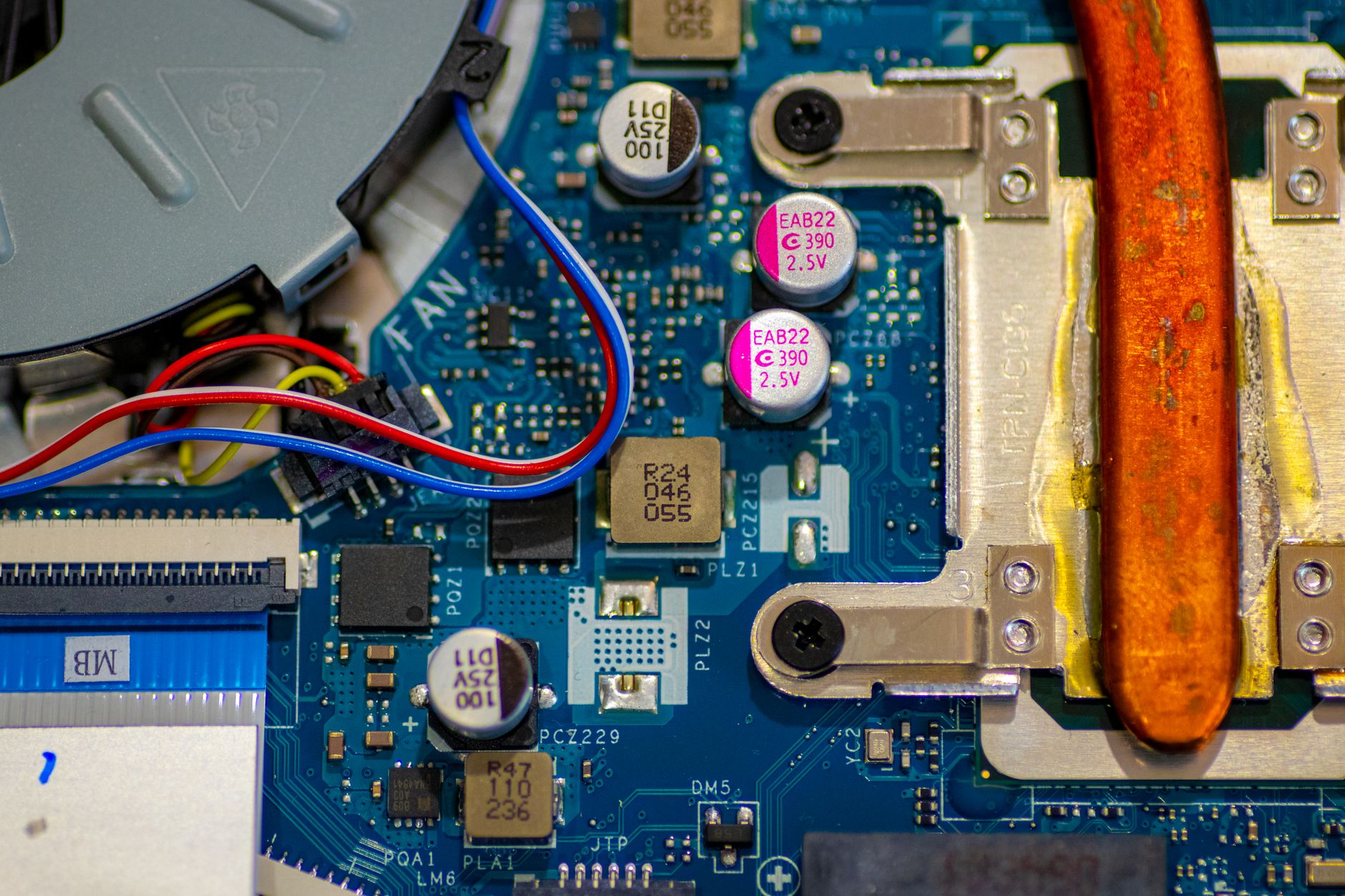
As Akoustis Technologies navigates Chapter 11 amidst a brutal IP dispute, the fallout exposes the fragile underbelly of America's hardware supply chain.
The story so far
For nearly a decade, Akoustis Technologies (AKTS) was heralded as one of the most promising homegrown players in the American semiconductor renaissance. Founded in 2014 and operating a dedicated manufacturing facility in New York, the company positioned itself as a critical supplier of advanced radio frequency (RF) filters—specifically its proprietary XBAW (Bulk Acoustic Wave) technology. These microscopic acoustic filters are the unsung gatekeepers of modern wireless communication, essential for isolating crowded signals in 5G smartphones, defense radar systems, and enterprise Wi-Fi routers. For a time, Akoustis represented exactly what US policymakers wanted: a domestic, highly innovative hardware manufacturer capable of competing with established behemoths in a critical supply chain.
However, that trajectory abruptly derailed in the summer of 2024. Following a bitter and protracted intellectual property lawsuit, a federal jury in Delaware ruled that Akoustis had misappropriated trade secrets and infringed on patents belonging to its much larger rival, Qorvo. The lawsuit alleged that former Qorvo employees, who went on to hold vital roles at Akoustis, had improperly taken proprietary designs and manufacturing blueprints. The jury awarded Qorvo a devastating $38 million in damages.
Unable to shoulder this massive legal and financial burden while simultaneously managing the high cash burn rate typical of semiconductor fabrication, Akoustis filed for voluntary Chapter 11 bankruptcy protection. The company is currently attempting to restructure its debts and explore the sale of its assets, including its state-of-the-art New York fabrication plant, leaving its customers and investors in a state of limbo.
Why this matters
To understand the gravity of the Akoustis collapse, one must understand the sheer physics and economics of the modern wireless spectrum. As global consumers and enterprises demand faster data speeds, telecom networks and Wi-Fi protocols have expanded into higher and more densely packed frequency bands (such as the 5 GHz, 6 GHz, and 7 GHz spectrums used in Wi-Fi 6E and Wi-Fi 7). In these ultra-crowded environments, signals easily bleed into one another, causing interference. High-performance Bulk Acoustic Wave (BAW) filters solve this by physically converting electrical signals into acoustic waves to filter out microscopic noise before converting them back. It is a marvel of atomic-level engineering.
This technology is not just a niche component; it is a foundational pillar of the multi-billion dollar RF front-end market. The US government and the Department of Defense view domestic production of these components as a matter of national security, which is why Akoustis previously received backing from DARPA. The downfall of a domestic manufacturer in this space consolidates power back into a functional duopoly controlled by titans like Qorvo and Broadcom. For supply chain managers, the loss of a viable third-party alternative means less negotiating leverage, higher component costs, and increased vulnerability to supply shocks.
Editorial analysis
The downfall of Akoustis Technologies highlights a profound paradox at the heart of America's current technology strategy. On one hand, the United States is spending billions through the CHIPS and Science Act to onshore semiconductor manufacturing, desperate to build a resilient ecosystem of domestic hardware startups. On the other hand, the brutal realities of intellectual property law and corporate litigation mean that the barrier to entry for deep-tech hardware remains astronomically high, and any misstep can be instantly fatal.
Hardware innovation is notoriously capital-intensive and grueling. To draw a historical parallel from the automotive sector, consider the engineering lengths required to push physical boundaries: when Ford set out to maximize fuel efficiency in 1983, they partnered with Italian coachbuilders and utilized Lockheed’s aerospace wind tunnels to develop the Probe IV concept car. The result was a staggering 0.152 drag coefficient—an aerodynamic feat that is still lower than any production car on the road today. Semiconductor engineering requires a similar, if not more extreme, level of cross-disciplinary, hyper-expensive R&D. Qorvo spent decades and billions of dollars perfecting the acoustic wave structures inside its chips. From a purely legal and ethical standpoint, the jury’s decision reinforces a vital truth: you cannot simply shortcut this R&D process. Protecting intellectual property is the only way to ensure that companies continue to invest in boundary-pushing research.
Yet, for the broader US industrial base, the outcome is troubling. The semiconductor industry operates in an environment of dense "patent thickets," where incumbent giants can effectively litigate smaller challengers out of existence. While Qorvo was entirely justified in protecting its trade secrets, the resulting bankruptcy of Akoustis eliminates a crucial domestic manufacturing node. It raises a difficult question for policymakers: how can the US nurture a diverse ecosystem of new semiconductor startups if the IP landscape heavily favors legacy monopolies?
Furthermore, this saga underscores the increasingly complex regulatory web that American tech companies must navigate. The Federal Communications Commission (FCC) dictates the spectrum allocations that make these RF filters necessary in the first place. The FCC is currently flexing its regulatory muscle across multiple domains—as seen in its recent, highly publicized dispute with network broadcaster ABC over whether the daytime talk show The View violated equal-time rules for political candidates. Just as the FCC aggressively polices broadcast airwaves, its technical mandates for the telecom spectrum dictate the hardware requirements for the entire semiconductor industry. When regulatory standards tighten, the technical demands on companies like Akoustis increase, requiring even more R&D, thereby raising the stakes of IP theft. It is a vicious cycle of regulation, innovation, and litigation.
What to watch next
For investors, technologists, and supply-chain professionals, the fallout from the Akoustis bankruptcy will unfold across several key vectors in the coming months:
- Asset auctions and M&A: Watch closely to see who acquires the Akoustis manufacturing facility in Canandaigua, New York. If a foreign entity or a non-chipmaker attempts to buy the fab, it may trigger a CFIUS (Committee on Foreign Investment in the United States) review given the defense applications of the technology.
- The rollout of Wi-Fi 7: As consumer electronics giants transition to the new Wi-Fi 7 standard, the demand for high-frequency BAW filters will surge. Monitor earnings calls from Broadcom and Qorvo to see if they cite pricing power or supply constraints due to the elimination of Akoustis as a competitor.
- Appeals and restructuring: Track the Delaware bankruptcy court docket. Akoustis may attempt to emerge from Chapter 11 as a restructured, leaner entity, or it may be entirely liquidated to satisfy Qorvo's $38 million judgment and other creditor claims.
For global readers
For the South Asian diaspora and global observers tracking India’s rapid technological ascent, the Akoustis saga offers a sobering lesson. Through the India Semiconductor Mission (ISM), New Delhi is heavily subsidizing the construction of domestic fabrication plants, attracting billions in investments from conglomerates like Tata Electronics and multinational packaging facilities from Micron. However, building the physical factories is only half the battle.
The semiconductor industry is ultimately governed by intellectual property. Indian fabless startups aiming to design indigenous 5G or Wi-Fi chips must realize that the global IP landscape is a minefield dominated by Western and East Asian giants. The Akoustis case proves that robust government backing and a domestic factory cannot save a company if its underlying intellectual property is compromised or legally contested. For India to truly succeed in its semiconductor ambitions, its educational and corporate ecosystems must prioritize rigorous "IP hygiene"—ensuring clean room designs, filing original patents, and avoiding the legal vulnerabilities that just destroyed one of America's most promising RF filter manufacturers.
The bottom line
The bankruptcy of Akoustis Technologies is more than just a corporate failure; it is a cautionary tale about the unforgiving nature of deep-tech hardware scaling. While government subsidies and strategic national interests can open the door for domestic semiconductor startups, surviving the brutal realities of intellectual property litigation and incumbent monopolies remains the ultimate test of endurance.
Key Takeaways
- Akoustis Technologies filed for Chapter 11 bankruptcy following a devastating $38 million trade secret and patent infringement verdict in favor of rival Qorvo.
- The company was a critical domestic producer of XBAW (Bulk Acoustic Wave) filters, components essential for mitigating signal interference in 5G and Wi-Fi 7 devices.
- The legal outcome highlights a paradox in US tech policy: a desire to build a diverse domestic semiconductor supply chain clashing with patent laws that favor incumbent giants.
- The bankruptcy forces telecom and defense supply chains to rely more heavily on a consolidated duopoly of legacy semiconductor manufacturers.
- For emerging semiconductor hubs like India, the Akoustis case underscores that rigorous intellectual property protection and 'IP hygiene' are just as vital as manufacturing infrastructure.
Frequently asked questions
What does Akoustis Technologies do?
Akoustis Technologies designs and manufactures advanced radio frequency (RF) filters, specifically Bulk Acoustic Wave (BAW) filters, which are used to isolate signals and reduce interference in 5G smartphones, Wi-Fi routers, and defense systems.
Why did Akoustis file for Chapter 11 bankruptcy?
The company filed for voluntary Chapter 11 bankruptcy in June 2024 after a federal jury ordered them to pay $38 million to Qorvo in a lawsuit involving patent infringement and the misappropriation of trade secrets.
How does this impact the broader tech industry?
The loss or restructuring of Akoustis reduces competition in the RF filter market, consolidating power among legacy giants like Broadcom and Qorvo. This can lead to higher component costs and tighter supply chains for next-generation consumer electronics.
- 01Road & Track: Tested: 2027 Mercedes-Maybach S580 Combines Ultra-Luxury with Surprising Value
- 02CNET: Win a New Apple Watch as CNET Guessing Game: Apple Edition Returns for Round Two
- 03The Verge: ABC tells the government to get out of its newsrooms
- 04Jalopnik: How Ford's 1983 Probe IV Concept Hit A 0.152 Drag Coefficient For Max MPG
This editorial article was written by US News Desk's editorial desk using current reporting from the publishers above. All facts were grounded against these sources.