The Changing Landscape of American Mobility: From Mega-Highways to Micro-EVs
As Toyota brings Tacoma production home and quirky EVs test the waters, the American automotive landscape faces a historic manufacturing pivot.
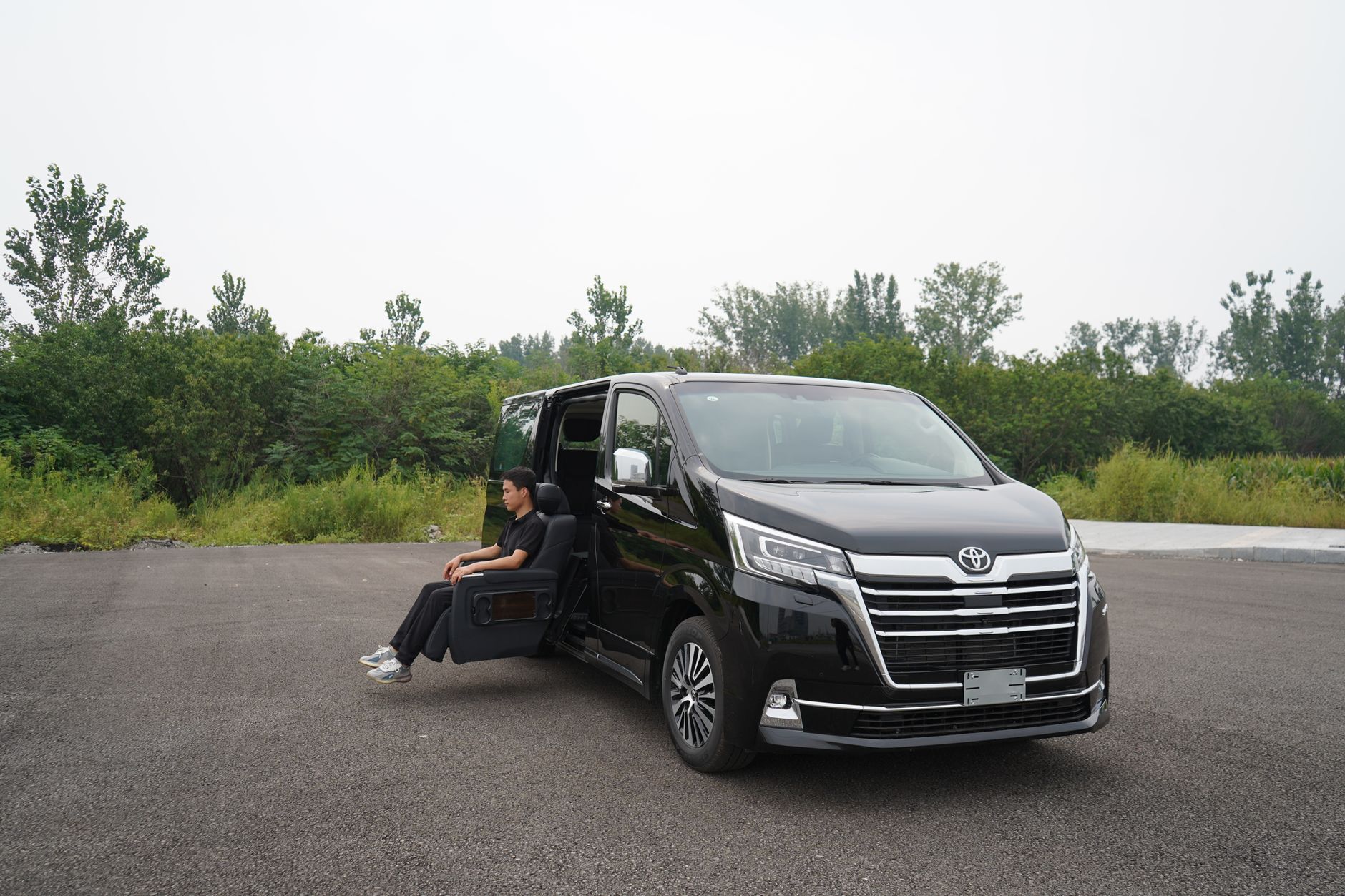
As Toyota reshapes its domestic truck manufacturing and foreign automakers introduce hyper-niche electric vehicles, the American automotive landscape is facing a profound cultural and economic pivot.
The story so far
The United States automotive sector is currently navigating a complex realignment, caught between the heavy-duty legacy of American manufacturing and a rapidly fragmenting global electric vehicle market. According to recent industry reports, the tension between traditional combustion-engine utility and experimental electric mobility has rarely been more pronounced. As reported by Motor1, Toyota is making a significant structural shift by bringing production of its popular mid-size truck, the Tacoma, back to the United States. The automotive giant will now build the Tacoma alongside its larger siblings, the Tundra and the Sequoia, signaling a massive consolidation of its North American truck manufacturing footprint and a renewed commitment to domestic assembly.
Simultaneously, the landscape for electric vehicles is fracturing into extremes, leaving American consumers with a bizarrely polarized market. On the premium end, global supply chain dynamics and regulatory hurdles are actively walling off American buyers. Road & Track reports that the much-anticipated 2027 Polestar 4 SUV—an electric vehicle notable for its wagon-like proportions and the return of a traditional physical rear window—will officially hit global markets on September 2. However, this launch comes just a little too late for the United States, meaning American consumers will likely miss out entirely on the 2027 model year of this flagship EV.
At the absolute opposite end of the spectrum, automakers are testing the waters of extreme micro-mobility in a country famous for its sprawling distances. As highlighted by InsideEVs, Fiat is attempting to introduce the Fiat Topolino to the US market with a starkly affordable price tag of $13,995. Yet, to call the Topolino a "car" is a stretch. With a maximum range of just 46 miles and a base top speed of a mere 19 mph, the vehicle is essentially a neighborhood runabout. In fact, it is not even street legal on standard American roads without the purchase of an optional upgrade package designed to incrementally raise its top speed.
This influx of hyper-limited EVs arrives in a country where the cultural and physical infrastructure is diametrically opposed to micro-mobility. The American driving psyche is deeply intertwined with vastness and endurance. Jalopnik recently highlighted this enduring legacy by spotlighting Wisconsin's Milwaukee Mile. Operating continuously since 1903, it stands as the world's oldest operating motor speedway, a testament to over a century of high-speed, heavy-metal automotive passion. Furthermore, the country's geography is defined by engineering marvels like its tallest, high-altitude highways—routes that Jalopnik notes are not for the faint of heart and remain ultimate bucket-list challenges for driving purists. The contrast between a 19-mph Fiat and a towering mountain pass perfectly encapsulates the current identity crisis of American mobility.
Why this matters
This convergence of manufacturing shifts and erratic vehicle availability underscores a critical inflection point in the global automotive economy, highlighting the stark friction between domestic protectionism and the realities of consumer demand. The juxtaposition is jarring: an American infrastructure built for massive, gas-powered endurance is colliding with a splintering global EV market where supply chain woes lock out premium models like the Polestar 4, while ultra-niche, heavily compromised experiments like the Topolino attempt to find a foothold. Toyota’s strategic decision to domesticate Tacoma production alongside the Tundra and Sequoia is a monumental vote of confidence in US manufacturing resilience. It reflects a calculated retreat from the vulnerabilities of globalized supply chains in favor of robust, localized supply chains. When a consumer is forced to weigh a sprawling, high-altitude road trip against the prospect of spending $13,995 on an electric quadricycle that cannot legally merge onto a county highway without aftermarket upgrades, it becomes clear that the regulatory and economic forces shaping the auto industry are fundamentally disconnected from the geographical reality of the American landscape.
Editorial analysis
From the vantage point of the editorial desk, Toyota’s localized manufacturing strategy is the most consequential development in this recent flurry of automotive news. By bringing the Tacoma back to American soil, Toyota is not merely optimizing logistics; it is reading the political and economic tea leaves. The era of frictionless global trade that defined the late 20th and early 21st centuries of auto manufacturing is firmly over. Automakers are increasingly aware that to sell profitably in the United States—especially in the highly lucrative light-truck segment—they must shield themselves from shipping bottlenecks, geopolitical tariffs, and shifting currency valuations. Integrating the Tacoma with the Tundra and Sequoia creates a fortress of domestic truck manufacturing that will likely yield massive dividends in brand loyalty and operational stability.
Conversely, the electric vehicle sector is suffering from a profound lack of cohesion, driven largely by regulatory friction. The absence of the Polestar 4 from the 2027 US model year lineup is not a failure of consumer interest, but a symptom of a walled-garden approach to trade. As the US government tightens the screws on EV tax credits and imposes steep tariffs on foreign-manufactured battery components, international brands are being forced to rethink their launch cadences. Global consumers will enjoy the Polestar 4’s wagon-like utility on September 2, while Americans are left waiting at the dock. This protectionist environment risks turning the US into an automotive island, where domestic consumers are starved of the diverse, mid-market EV innovations rapidly proliferating in Europe and Asia.
Then there is the Fiat Topolino, a vehicle that feels less like a serious transportation solution and more like a sociological experiment. The introduction of a 19-mph micro-car into a nation defined by its towering highways and deep-rooted motorsport heritage (epitomized by the 120-year history of the Milwaukee Mile) borders on the absurd. America is a country where "range anxiety" is not merely a psychological barrier, but a physical reality dictated by sheer geography. While neighborhood electric vehicles make perfect sense in the dense, narrow streets of Rome or Paris, deploying them in the sprawling suburbs of the American Sunbelt ignores the fundamental geometry of US urban planning. Fiat's attempt to bridge this gap with optional speed packs only highlights the vehicle's inherent mismatch with the market. It represents a fundamental misunderstanding of the American consumer, who views the automobile not just as a tool for a two-mile commute, but as an insurance policy for absolute geographic freedom.
What to watch next
As the automotive industry continues this messy transition, readers should keep a close eye on several critical barometers over the next 18 months:
- Toyota's domestic production scaling and labor dynamics: Track the rollout of the US-built Tacoma closely. Moving production of a high-volume vehicle requires immense operational precision. Observers should monitor upcoming quarterly earnings calls to see how this transition impacts Toyota's North American profit margins and whether it triggers any new unionization efforts at the facilities housing the Tacoma, Tundra, and Sequoia.
- Regulatory maneuvers by foreign EV brands: Watch how companies like Polestar respond to being locked out of the immediate US market. We may see announcements of new North American assembly plants or battery joint ventures designed explicitly to bypass tariff barriers and bring delayed models to the US by 2028.
- The sales trajectory of extreme micro-mobility: Keep an eye on the early registration numbers for the Fiat Topolino. Its commercial performance will serve as a definitive stress test for whether European-style micro-EVs can survive outside of niche retirement communities, or if they will face swift discontinuation.
- Infrastructure adaptation for alternative vehicles: As ultra-slow vehicles enter the market, look for any localized municipal legislation or zoning board rulings regarding where vehicles capped at 19 mph can legally operate, especially in heavily trafficked suburban corridors.
For global readers
For our global South Asian diaspora—many of whom closely track India's rapid industrialization—the United States' current automotive awkwardness offers a fascinating parallel, and a stark contrast, to India's own trajectory. Much like Toyota is moving Tacoma production to the US to solidify a localized supply chain, India's aggressive Make in India initiative and Production-Linked Incentive (PLI) schemes are designed to force automakers to manufacture domestically. However, the electric vehicle transition highlights a massive divergence in cultural applicability. While the US awkwardly attempts to force micro-mobility (like the Fiat Topolino) into an infrastructure dominated by massive highways and massive trucks, India is organically succeeding in exactly this space. Companies like Tata and Mahindra, alongside a booming electric two-wheeler market, are pioneering small-scale EV adoption because the Indian urban landscape is perfectly engineered for it. The US is struggling to downsize its vehicular footprint to meet EV limitations, whereas India is seamlessly scaling up its existing micro-mobility culture into a globally dominant electric force.
The bottom line
The American automotive landscape is fracturing into two distinct realities: a robust, highly localized market for traditional heavy-duty trucks and a disjointed, chaotic frontier for electric vehicles. As Toyota secures its truck legacy on US soil and foreign EVs either skip the market entirely or arrive as geographically impractical micro-cars, it is clear that the era of a unified, one-size-fits-all global auto market is over. For the American consumer, the future of driving is becoming intensely regional, highly regulated, and structurally divided.
Key Takeaways
- Toyota is consolidating its North American truck manufacturing by producing the Tacoma in the US alongside the Tundra and Sequoia.
- The 2027 model year Polestar 4 SUV will hit global markets on September 2, but US buyers will likely miss out due to market and supply chain delays.
- Fiat is launching the $13,995 Topolino micro-EV in America, though its 19-mph top speed and 46-mile range highlight a stark mismatch with US driving habits.
- America's deep-rooted car culture, evidenced by historic tracks like the 1903 Milwaukee Mile and massive high-altitude highways, remains diametrically opposed to low-speed urban EV solutions.
- The US auto market is retreating from globalization, prioritizing localized supply chains for legacy vehicles while struggling to integrate foreign EV innovations.
Frequently asked questions
Why is Toyota moving Tacoma production back to the US?
Toyota is consolidating its North American truck manufacturing, opting to build the mid-size Tacoma alongside the Tundra and Sequoia to strengthen its domestic supply chain and insulate against global trade vulnerabilities.
Will the Polestar 4 SUV be available to American buyers?
The Polestar 4 is scheduled to hit global markets on September 2, but reports indicate it will arrive too late for US buyers to purchase the 2027 model year, largely due to supply chain and regulatory hurdles.
Is the new Fiat Topolino street legal in the United States?
In its base configuration, the $13,995 Fiat Topolino is not street legal on standard US roads. With a top speed of only 19 mph, it requires an optional upgrade package to achieve legal minimum speeds.
- 01Jalopnik: Wisconsin's Milwaukee Mile Is The World's Oldest Operating Motor Speedway
- 02Road & Track: Polestar 4 SUV to Hit the Market September 2, Just a Little Too Late for Americans
- 03Motor1: Toyota Is Bringing The Tacoma Back To America
- 04InsideEVs: Fiat's $13,995 EV For America Is Cute, But Barely A Car
This editorial article was written by US News Desk's editorial desk using current reporting from the publishers above. All facts were grounded against these sources.