The Extremes of the American Road: What the Maybach and Ram TRX Reveal About US Consumerism
While mass-market SUVs like the GMC Terrain dominate suburban driveways, the US automotive industry is increasingly pivoting to cater to billionaires and horsepower purists.
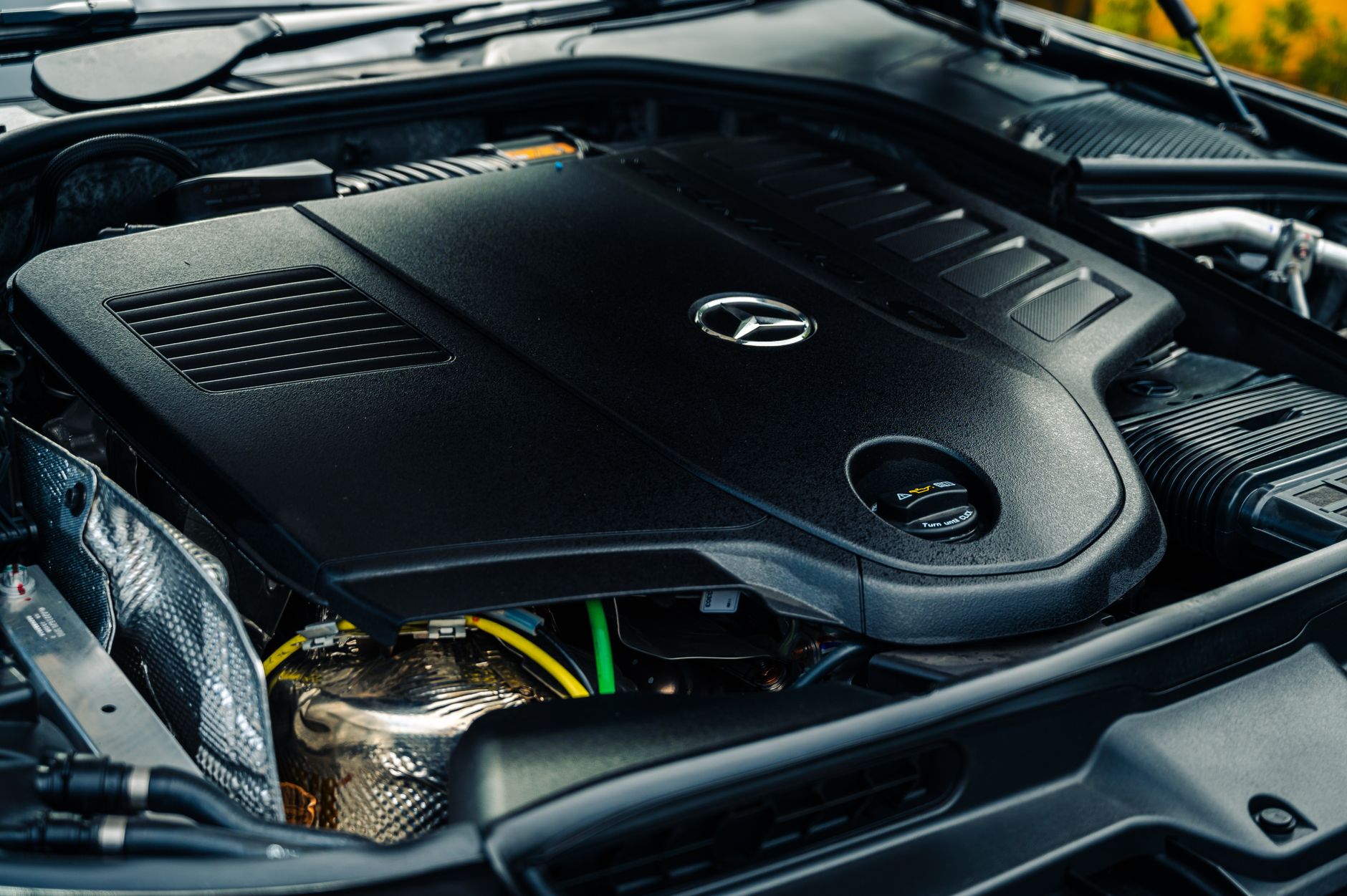
While mass-market SUVs like the GMC Terrain dominate suburban driveways, the US automotive industry is increasingly pivoting to cater to billionaires and horsepower purists.
The story so far
The American automotive landscape in the summer of 2026 is defined less by the practical vehicles that most citizens actually buy, and more by the spectacular extremes that automakers are engineering for the fringes of the market. While a typical consumer might be searching for everyday US news regarding practical compact crossovers like the GMC Terrain, the vehicles currently dominating the automotive press represent a starkly different reality. Recent reviews from leading US automotive publications highlight an industry deeply invested in ultra-luxury and unhinged performance, signaling a market that is aggressively catering to the extremes of American wealth and recreation.
According to a recent review published by Road & Track, the 2027 Mercedes-Maybach S580 is making waves for offering what the publication wryly calls "surprising value" for "tight-fisted billionaires." The review notes that the vehicle's new flat-plane V-8 engine delivers a driving experience so refined that it justifies bypassing the traditionally more prestigious, range-topping V-12 variant. The Maybach S580 remains a quintessential symbol of boardroom opulence, designed for executives who demand absolute isolation from the outside world.
On the diametrically opposite end of the cultural spectrum, Motor1 has heralded the return of the 2027 Ram TRX. In a glowing review of the high-horsepower truck, the publication confirmed that the TRX remains fundamentally "unhinged." Designed to conquer literally every type of terrain—and even perform admirably while catching air—the Ram TRX is a monument to brute force and off-road supremacy. Together, these two vehicles illustrate the twin pillars of American automotive aspiration: unparalleled, insulated luxury and defiant, earth-conquering power.
Why this matters
The simultaneous celebration of a six-figure luxury sedan and an excessively powerful off-road truck highlights a growing automotive polarization in the United States. While the media cycle is captivated by these expensive marvels of engineering, the everyday American buyer is often relegated to a shrinking middle ground, looking for financing deals on sensible family haulers like the GMC Terrain or the Toyota RAV4.
This polarization matters because the automotive market is a highly accurate barometer of broader macroeconomic trends in the US. The fact that Mercedes-Benz can market a Maybach S580 as a "value" proposition—despite a price tag that easily eclipses the median cost of an American home in many regions—speaks volumes about the concentration of wealth. Simultaneously, the sustained demand for the Ram TRX, a vehicle that offers virtually no practical utility for a daily commute but provides immense recreational thrills, demonstrates that a significant segment of the population still possesses the disposable income required to prioritize horsepower over fuel efficiency. The V-8 engine, whether refined in a Maybach or roaring in a Ram, continues to serve as a powerful cultural signifier in a country deeply divided by economics.
Editorial analysis
To understand the current trajectory of the American auto industry, one must look beyond the sheet metal and examine the psychology of the consumer. The Road & Track assessment of the 2027 Mercedes-Maybach S580 provides a fascinating glimpse into the mindset of the ultra-wealthy. Historically, the V-12 engine was the undisputed king of luxury—a buttery-smooth, excessively complex piece of engineering that signaled the buyer had spared absolutely no expense. However, the pivot toward a flat-plane V-8 architecture that is "good enough" to replace the V-12 suggests a subtle shift even among the elite. It reveals a desire for modern, responsive engineering over antiquated prestige, without sacrificing an ounce of the ultra-luxury interior experience. It is a calculated indulgence.
The Ram TRX represents a completely different, yet equally American, form of indulgence. As Motor1 reported, this truck allows drivers to experience high-horsepower fun "on every type of terrain. Even in the air." There is a profound absurdity in engineering a 6,000-pound truck to fly over sand dunes, yet it is exactly this absurdity that makes it so appealing. The TRX is a mechanical manifestation of American exceptionalism—a loud, brash, and unapologetic rejection of global trends toward downsizing and efficiency.
Interestingly, the survival of these massive internal combustion engines feels almost poetic when viewed against the broader news cycle. In a recent scientific report highlighted by Wired, researchers concluded that the Earth will likely not be swallowed by the sun when our star becomes unstable in roughly 5 billion years. In much the same way, the American V-8 engine seems to have secured its own unexpected stay of execution. Despite years of regulatory pressure and the looming specter of an all-electric future, automakers continue to find profitable niches for internal combustion longevity, engineering these engines to be more potent and desirable than ever.
Furthermore, this automotive narrative unfolds against a backdrop of increasing regulatory and media scrutiny in the US. As The Verge recently reported, the Federal Communications Commission (FCC) is currently embroiled in a dispute with ABC over the investigation of political airtime on The View. This clash over broadcast regulations mirrors the ongoing tensions in the automotive sector, where federal agencies continually attempt to rein in emissions and fuel consumption, while automakers and consumers push back, demanding the freedom to build and buy vehicles that reflect their personal desires, however extreme they may be.
What to watch next
For observers of the US economy and the automotive sector, the coming months will provide crucial data points on how long this era of extremes can last. Readers should closely monitor the following developments:
- Mass-market earnings reports: While the Maybach and TRX generate headlines, the financial health of companies like General Motors relies heavily on the sales volume of the GMC Terrain and Chevrolet Equinox. Upcoming quarterly earnings will reveal if the middle-class consumer is pulling back on spending.
- Regulatory pushback on emissions: Keep an eye on the Environmental Protection Agency (EPA) and its response to the continued proliferation of high-horsepower, low-efficiency V-8 trucks. A potential tightening of fleet-wide emissions standards could force automakers to hybridize their most unhinged models.
- The shift in luxury powertrains: Watch to see if other ultra-luxury manufacturers follow Mercedes-Maybach's lead in phasing out V-12 engines in favor of highly engineered, flat-plane V-8s, signaling a permanent shift in the definition of high-end automotive prestige.
For global readers
For the South Asian diaspora and global observers, the American obsession with massive displacement engines and sprawling luxury vehicles offers a stark contrast to the automotive realities in India. In the Indian market, automotive engineering is dictated by stringent tax structures and physical space constraints. Vehicles are heavily taxed based on engine size and physical length, resulting in a market utterly dominated by sub-4-meter compact SUVs with small, highly efficient 1.0L to 1.5L engines.
To a consumer accustomed to the pragmatism of a Maruti Suzuki Brezza or a Tata Nexon, the concept of a Ram TRX designed to "catch air" off a dirt mound, or a Mercedes-Maybach engineered specifically to isolate billionaires from the noise of the street, seems entirely alien. The regulatory divergence between the two nations is absolute. While India uses taxation to enforce efficiency and manage urban congestion, the US regulatory environment still leaves ample room for the glorification of sheer size and power. For South Asian professionals moving to the US, navigating this automotive culture—where a sensible GMC Terrain is considered "small" and a V-8 truck is a standard commuter vehicle—remains one of the most visible and jarring aspects of the American lifestyle.
The bottom line
While everyday American consumers continue to seek pragmatic mobility in vehicles like the GMC Terrain, the US automotive industry's cultural and technological heart currently beats at the absolute fringes. The celebration of the ultra-luxurious Maybach S580 and the gravity-defying Ram TRX proves that, for those with the capital to afford it, the American dream of unapologetic, V-8-powered excess is not just surviving—it is thriving.
Key Takeaways
- US auto media is currently hyper-focused on the extremes of the market, celebrating ultra-luxury sedans and high-horsepower off-road trucks over mass-market vehicles.
- The 2027 Mercedes-Maybach S580 reflects a shift in elite consumer preferences, proving a highly engineered flat-plane V-8 can successfully replace the traditional V-12.
- The 2027 Ram TRX continues to symbolize American automotive exceptionalism, offering unhinged, gravity-defying performance that bucks global efficiency trends.
- The divergence between extreme vehicles and everyday practical SUVs like the GMC Terrain highlights a growing economic polarization within the US consumer base.
- Compared to efficiency-focused markets like India, the US retains a unique regulatory and cultural environment that allows massive, gas-powered vehicles to flourish.
Frequently asked questions
Why is the V-8 engine replacing the V-12 in ultra-luxury cars like the Maybach?
Automakers are finding that modern flat-plane V-8 engines can deliver the immense power and smooth refinement required for ultra-luxury vehicles, offering better efficiency and dynamics without sacrificing the premium experience previously exclusive to V-12s.
What makes the 2027 Ram TRX so notable in the current market?
Despite industry trends toward electric vehicles and smaller engines, the Ram TRX remains an unapologetically high-horsepower, gas-guzzling truck designed for extreme off-road performance, proving that strong demand still exists for brute-force vehicles in the US.
How does the US auto market compare to India's vehicle landscape?
The US market accommodates massive, high-displacement vehicles like the Ram TRX and Maybach due to relaxed space and tax constraints. In contrast, India heavily taxes vehicles based on engine size and length, leading to a market dominated by highly efficient, sub-4-meter compact SUVs.
- 01Road & Track: Tested: 2027 Mercedes-Maybach S580 Combines Ultra-Luxury with Surprising Value
- 02Motor1: The Ram TRX Is Back, And It's Still Unhinged: Review
- 03Wired: Good News! Turns Out the Earth Will Never Be Swallowed by the Sun
- 04CNET: Win a New Apple Watch as CNET Guessing Game: Apple Edition Returns for Round Two
- 05The Verge: ABC tells the government to get out of its newsrooms
This editorial article was written by US News Desk's editorial desk using current reporting from the publishers above. All facts were grounded against these sources.