The Festivalization of Everything: From World Cup Drama to Creator Summits
As the 2026 World Cup grips the US, a convergence of live events highlights the high-stakes evolution of the global experience economy.
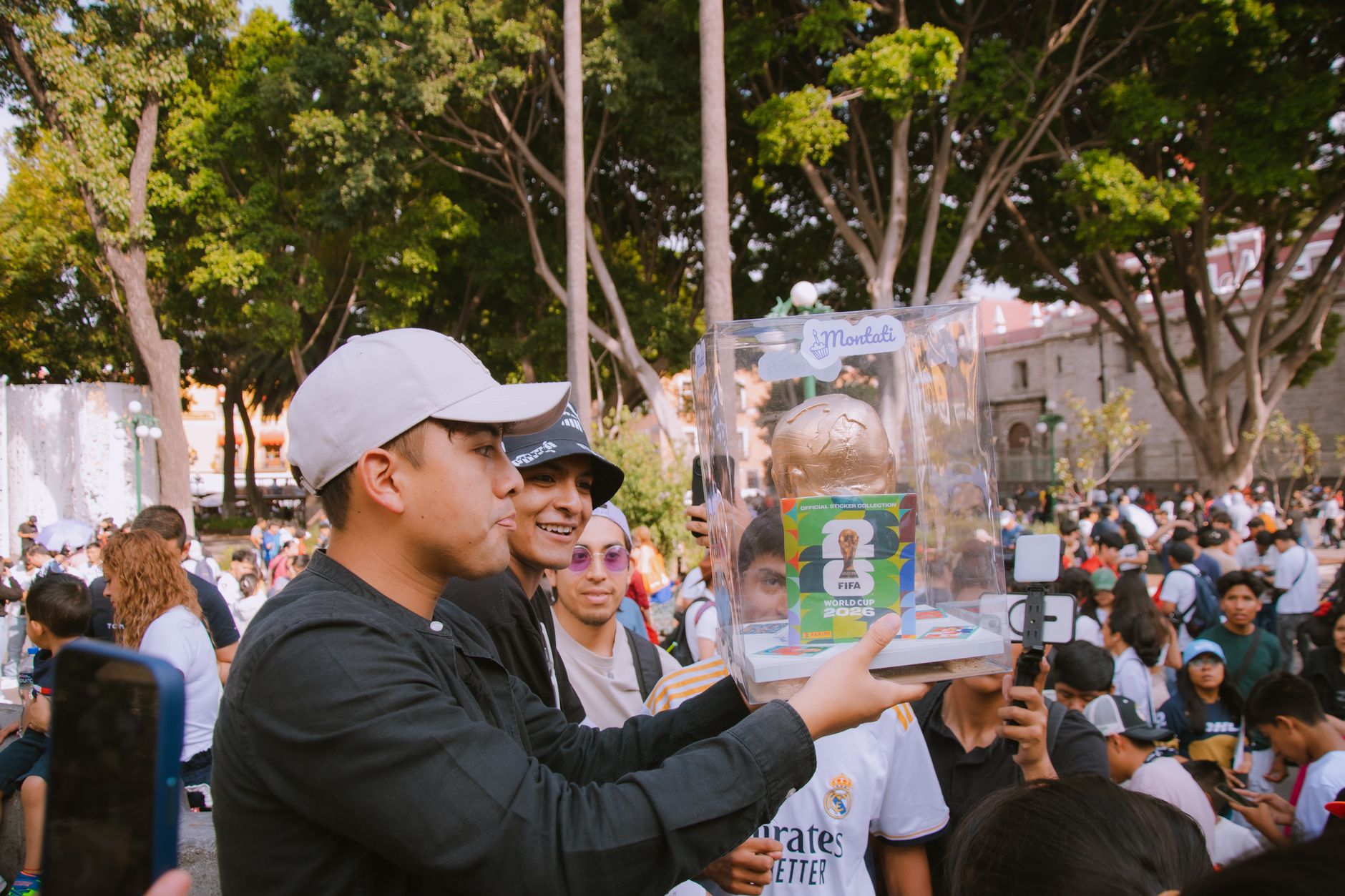
As the 2026 World Cup grips the US, a convergence of live events highlights the high-stakes evolution of the global experience economy.
The story so far
The summer of 2026 has transformed the United States into the epicentre of a sprawling, multi-city festival of sport, culture, and commerce, anchored heavily by the FIFA World Cup. Host cities across the nation—from the vibrant kickoff fan festivals in Atlanta to the tense, high-stakes match atmospheres in Seattle—are currently navigating the sheer logistical and cultural weight of global soccer's premier tournament. However, the on-pitch action on July 6 has been somewhat overshadowed by a bitter administrative dispute. Just 11 hours before a crucial kickoff in Seattle, the Belgian soccer federation launched a formal challenge against FIFA's ruling that allows United States Men's National Team forward Folarin Balogun to play. Balogun had received a red card in a previous match, a penalty that traditionally carries an automatic suspension. European soccer's governing body, UEFA, has publicly backed Belgium, fiercely criticising FIFA's waiving of the suspension as an "incomprehensible and unjustifiable decision."
While this historic furor grips the sporting world, parallel global festivals are currently illustrating how live events have become the definitive anchor for modern industry. In the South of France, the Cannes Lions advertising festival has served as a critical gathering ground for the burgeoning creator economy. Recent discussions at the festival, including a prominent podcast appearance by Ali Berman and Raina Penchansky—who run the influential Creators division at United Talent Agency (UTA)—have highlighted the massive corporatisation of digital talent. The executives mapped out how deeply entrenched digital creators have become in global marketing, moving far beyond simple brand endorsements to orchestrating complex, multi-platform media empires.
Meanwhile, the automotive sector is preparing for its own traditional summer showcase across the Atlantic. The Goodwood Festival of Speed is set to return to West Sussex from July 9 to 12. Positioned as one of the most vital events on the motoring calendar, this year's extravaganza promises massive global debuts that bridge the gap between historic legacy and future technology. Highlights include the public debut of the electric Alpine A110, a new, roaring Toyota V8 supercar, and a meticulously rebuilt McLaren M6GT—a 1960s road-going supercar reconstructed using its original body molds and restored parts.
Why this matters
We are currently witnessing the total "festivalization" of the global economy. Whether it is a World Cup fan zone in Atlanta drawing tens of thousands of diaspora supporters, the elite networking yachts of Cannes Lions, or the high-octane hill climbs of Goodwood, the underlying economic engine is identical: in an era of infinite digital commoditization, the live, exclusive experience is the ultimate premium product. These are no longer merely standalone events; they are sprawling, multi-billion-dollar content ecosystems designed to feed a voracious global media appetite.
The stakes are extraordinarily high, both culturally and financially. The creator economy, which UTA's executives are actively shaping, is projected to be a multi-billion-dollar industry that thrives on the exact kind of cultural moments generated by mega-events like the World Cup. When FIFA makes an "incomprehensible" governance decision regarding a star player like Balogun, it does not just impact the tactical lineup for the US team; it impacts broadcast ratings, brand sponsorships, and the secondary content market where creators parse, debate, and monetize the drama. Understanding this intricate web of live events is crucial for anyone navigating the modern intersections of policy, media, and global business.
Editorial analysis
The ongoing dispute between FIFA, UEFA, and the Belgian soccer federation over Folarin Balogun is highly symptomatic of a broader institutional friction that defines the modern era of global governance. Traditional regulatory bodies are increasingly finding themselves at odds over how to manage highly valuable assets—in this case, a marquee player whose presence on the pitch guarantees a higher domestic viewership in the United States. FIFA’s controversial leniency toward a host-nation star reveals a calculated, albeit deeply cynical, prioritisation of market engagement over established sporting precedent. By drawing the ire of UEFA, FIFA is exposing the fragile fault lines within international sports law, demonstrating that when billions of dollars in broadcast and festival revenue are on the line, traditional regulatory frameworks are highly malleable.
This breakdown of traditional authority in sports mirrors the media transition actively being negotiated at Cannes Lions. The prominence of United Talent Agency's creator division highlights a fundamental shift in distribution power. Historically, a World Cup or a massive automotive debut relied entirely on legacy broadcasters and institutional press for amplification. Today, the ecosystem is dominated by creator-led distribution. Ali Berman and Raina Penchansky are architecting deals that acknowledge a stark new reality: individual creators often command more direct, trusted influence over niche global audiences than the legacy institutions themselves. A creator vlogging from an Atlanta kickoff festival or providing real-time analysis of the Seattle match can drive deeper consumer engagement than a traditional television broadcast.
Fascinatingly, this tension between the old world and the new is physically manifested at the upcoming Goodwood Festival of Speed. The automotive industry is caught in a similar transitional purgatory. On one hand, you have the electric Alpine A110, representing the heavily regulated, environmentally mandated future of mobility. On the other, Toyota is debuting a brand-new V8 supercar, stubbornly catering to the visceral, sensory experience of internal combustion. And hovering above both is the rebuilt 1960s McLaren M6GT, a pure exercise in legacy mining. Just as FIFA mines its historical prestige to justify arbitrary modern rulings, and just as creators mine legacy events for new digital content, the automotive industry relies on nostalgic festivals to maintain its cultural relevance amidst an aggressive technological transition.
Ultimately, these three seemingly disparate events—a World Cup governance crisis, an advertising summit on the French Riviera, and an English automotive festival—are intimately connected. They are all masterclasses in intellectual property management. The modern mega-event is no longer a destination; it is a raw material. It exists to be atomized into thousands of distinct digital products, distributed globally, and monetized by a new class of digital brokers.
What to watch next
For observers monitoring the intersection of global sports, media, and commerce, several immediate developments demand attention over the coming weeks:
- The adjudication of Belgium's protest: Watch closely to see if the Court of Arbitration for Sport (CAS) or internal FIFA appellate bodies intervene before the tournament progresses further, which could establish a dangerous new precedent for host-nation favouritism.
- Automotive market reactions post-Goodwood: Track the consumer and investor response to the stark divergence in powertrain strategies on display from July 9-12, specifically how the market values Toyota's V8 against the rising tide of electric sports cars like the Alpine.
- Creator agency consolidation: Following the aggressive posturing by UTA executives at Cannes, expect to see a wave of mergers and acquisitions in the talent management space as legacy Hollywood agencies scramble to acquire pure-play digital influencer portfolios.
- Atlanta and Seattle infrastructure stress tests: As the World Cup continues, urban planners and civic policy experts will be closely monitoring how US host cities manage the sustained logistical strain of week-long fan festivals and transit demands.
For global readers
For the South Asian diaspora and observers in India, the "festivalization" of the United States sports and cultural calendar offers a striking parallel to the evolution of the Indian Premier League (IPL). Much like how US host cities are transforming into month-long carnivals for the World Cup, the IPL pioneered the model of turning a sporting competition into a continuous, travelling cultural festival. The institutional clashes between FIFA and UEFA bear a strong resemblance to the historical friction between the BCCI (Board of Control for Cricket in India) and global cricket bodies, where market size and financial dominance often dictate regulatory outcomes. Furthermore, Indian talent management agencies are currently studying the UTA model discussed at Cannes, seeking to institutionalise the subcontinent's massive, decentralised creator economy by building direct bridges between local digital influencers and global mega-events.
The bottom line
The controversies, debuts, and deals defining this July—from an unprecedented FIFA ruling in Seattle to the boardroom strategies at Cannes and the automotive theater at Goodwood—prove that the experience economy is thriving. As traditional boundaries between sports, media, and technology continue to collapse, the most valuable currency in the global market is no longer just the product itself, but the exclusive, heavily monetized live festival surrounding it.
Key Takeaways
- The Belgian soccer federation and UEFA are heavily criticising FIFA for waiving US forward Folarin Balogun's red card suspension just 11 hours before a World Cup match.
- Global live events like the World Cup are increasingly driving the multi-billion-dollar creator economy, a shift highlighted by UTA executives at the Cannes Lions festival.
- The upcoming Goodwood Festival of Speed (July 9-12) mirrors broader cultural transitions by showcasing both future EVs (Alpine A110) and legacy combustion engines (Toyota V8, 1960s McLaren).
- Host cities across the US, such as Atlanta and Seattle, are transforming into sprawling cultural hubs to support the massive infrastructure demands of modern event festivalization.
- The ongoing structural shifts in global sports governance strongly parallel the evolution of mega-events like the IPL in the South Asian market.
Frequently asked questions
What is the Goodwood Festival of Speed?
It is a major annual automotive festival in West Sussex, UK. The July 2026 event features significant debuts, including an electric Alpine A110, a new Toyota V8, and a restored 1960s McLaren M6GT.
How does the creator economy connect to these global festivals?
As discussed by United Talent Agency executives at Cannes Lions, mega-events act as massive content engines. Digital creators use these live festivals to generate engagement, orchestrating brand deals that often rival traditional broadcast advertising.
- 01NPR Top Stories: Historic World Cup furor at 'incomprehensible' FIFA decision to let U.S. forward Balogun play
- 02Mashable: FIFA World Cup schedule today: Games, kickoff times, livestream info for July 6
- 03The Verge: Inside the big business of the creator economy, with the agents making it happen
- 04Car and Driver: McLaren Accurately Rebuilds Its Original '60s Road-Going Supercar
- 05Autocar: Goodwood Festival of Speed 2026: Every car you need to see
This editorial article was written by US News Desk's editorial desk using current reporting from the publishers above. All facts were grounded against these sources.