Toyota's Strategic Moves: Truck Concepts, Trade Warnings, and Heritage
*From exploring RAV4-based compact pickups to navigating European trade regulations, Toyota balances engineering heritage with future markets.*
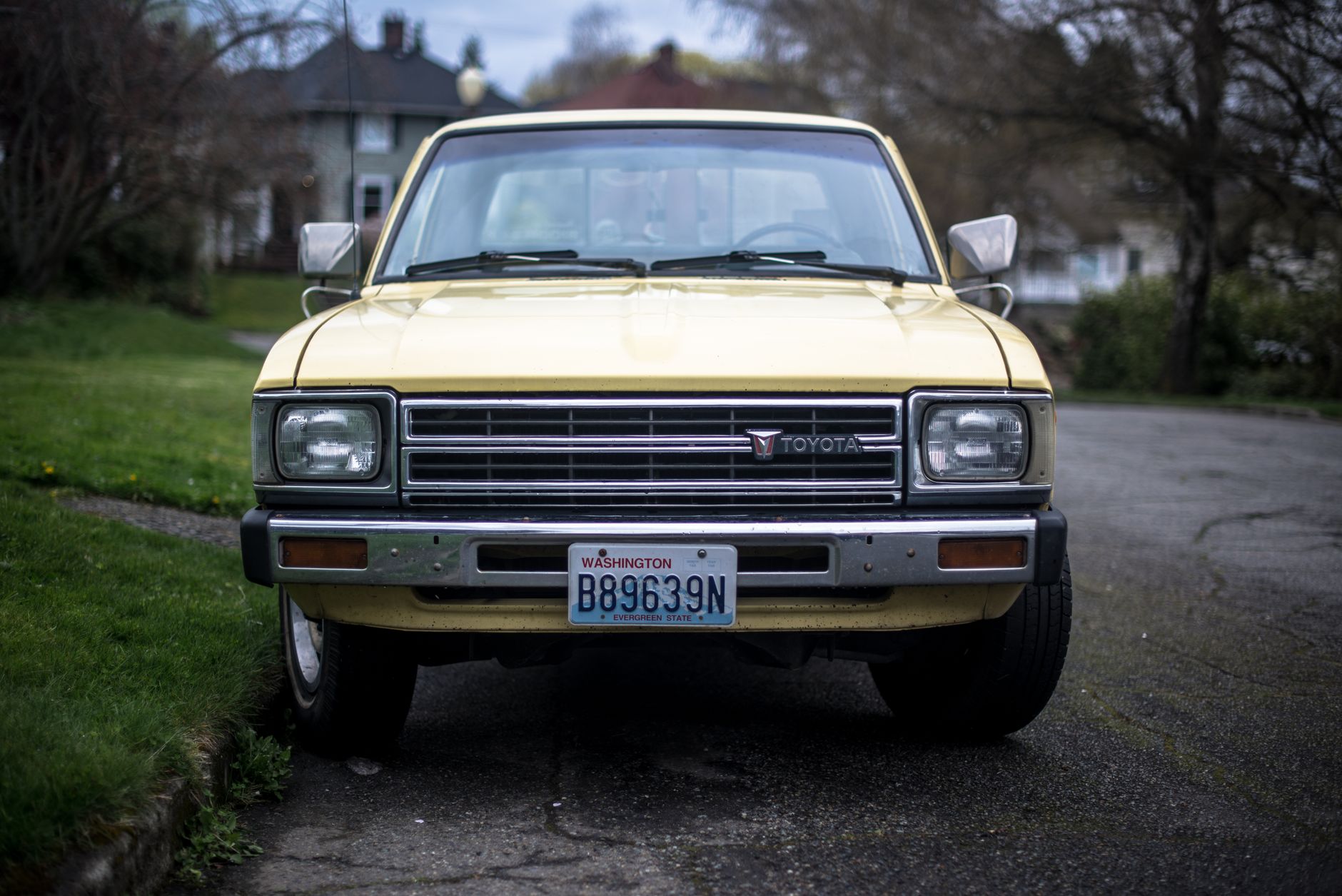
As the global automotive industry navigates a complex transition involving changing consumer tastes and tightening international trade regulations, Toyota continues to adjust its long-term strategy. The automaker is currently managing a delicate balance across several fronts—evaluating new segments for the North American market, protecting its international manufacturing networks, and continuing to cater to automotive enthusiasts.
Recent developments highlight how the world's largest automaker is approaching everything from hypothetical compact trucks to high-performance hatchbacks and geopolitical trade disputes.
The Temptation of a Compact Pickup
The American pickup truck market has long been dominated by full-size behemoths, but a recent resurgence in compact, crossover-based trucks has caught the attention of major manufacturers. Specifically, the runaway success of the Ford Maverick has proven that there is a robust appetite for smaller, unibody trucks that offer utility without the heavy footprint of a traditional body-on-frame vehicle.
According to reporting from Motor1 and The Drive, Toyota is keenly aware of this shifting market dynamic. A top Toyota engineer recently admitted that a Maverick-style pickup based on the highly successful RAV4 architecture is "quite appealing" and "tempting."
While the prospect of a Toyota-badged compact truck excites many consumers, the company has clarified its immediate timeline. The top engineer stated that there are currently no active plans to bring a RAV4-based truck to production. However, they candidly acknowledged that "deep in our heart of hearts it would be fun."
For US consumers, a RAV4-based pickup would make strategic sense. The RAV4 is already a cornerstone of Toyota's North American lineup, and utilizing its existing platform to create a versatile, fuel-efficient truck could offer a formidable alternative in a segment currently dominated by just a few models.
Sustaining the Enthusiast Market
While utilitarian vehicles like a potential compact pickup address practical consumer needs, Toyota has not abandoned the performance sector. Over recent years, the automaker's Gazoo Racing (GR) division has injected new vitality into the brand, offering specialized models that cater directly to driving enthusiasts.
This commitment is continuing into the next model year. Recent coverage from Car and Driver provided a detailed look at the exterior of the upcoming 2026 Toyota GR Corolla Premium Plus. Through comprehensive photo galleries, the publication showcased the new model from every angle, highlighting the aggressive aerodynamic styling and widened stance that have become hallmarks of the GR Corolla lineage.
By continuing to refine and expand the GR Corolla lineup with trims like the Premium Plus, Toyota is demonstrating that niche enthusiast vehicles remain an important part of its identity, even as the broader industry focuses heavily on mass-market crossovers and utility vehicles.
Navigating 'Made in Europe' Trade Barriers
Beyond product development, Toyota is actively engaging in international trade dialogues that could have profound impacts on global automotive supply chains. According to Autocar, Toyota has issued a stern warning to the European Union regarding newly proposed trade and manufacturing legislation.
The legislation in question centers around "Made in Europe" rules, designed to incentivize localized manufacturing within the EU bloc. However, Toyota warns that the European Union risks severe economic "isolation" and could lose significant corporate investment if these barriers are fully implemented.
The primary issue stems from how the rules treat neighboring nations that are deeply integrated into current supply chains. As reported by Autocar, Toyota's main concerns regarding the legislation include:
- The potential for the EU to isolate itself from global automotive partnerships and investments.
- The locking out of crucial non-EU nations, such as the United Kingdom and Turkey, from vital trade benefits.
- The disruption of established, highly efficient cross-border manufacturing networks that automakers rely on to keep vehicle prices competitive.
Because Toyota operates major manufacturing facilities in both the UK and Turkey, these proposed barriers would directly impact the company's ability to seamlessly produce and distribute vehicles across the European continent. For consumers—both in Europe and globally—such trade disputes often lead to shifting production strategies, which can ultimately influence vehicle availability and pricing.
Honoring Engineering Heritage
As Toyota charts its future through potential new models and complex geopolitical challenges, the automotive community continues to celebrate the brand's engineering legacy. Toyota built its reputation on the back of legendary reliability, much of which was driven by its iconic engine architectures.
A recent retrospective by Jalopnik took a detailed look at one of Toyota's most famous engine families, exploring the differences between the 1UZ, 2UZ, and 3UZ engines. These V8 powerplants motivated a wide variety of Toyota and Lexus models over the years, establishing a benchmark for smoothness and durability.
As the Jalopnik analysis highlighted, the evolution of the UZ family was marked by several distinct engineering choices:
- 1UZ: The original V8 that launched the Lexus brand, known for its over-engineered aluminum block and incredible longevity.
- 2UZ: A heavier-duty variant that utilized different block materials—specifically a cast-iron block—to provide the durability required for Toyota's larger trucks and SUVs.
- 3UZ: A later iteration that featured significant variations in capabilities and materials, increasing displacement to support the next generation of luxury sedans.
Understanding this mechanical history offers valuable context for Toyota's modern strategy. The meticulous engineering that defined the 1UZ, 2UZ, and 3UZ engines is the same foundational philosophy the company is now applying to its modern crossover architectures and specialized Gazoo Racing powertrains.
Whether Toyota is debating the merits of a RAV4-based pickup, fine-tuning the 2026 GR Corolla Premium Plus, or fighting to protect its international supply chains, the automaker's approach remains rooted in a long history of calculated, durable engineering.
Key Takeaways
- A top Toyota engineer revealed that a RAV4-based compact truck to rival the Ford Maverick is a 'tempting' concept, though no official production plans currently exist.
- Toyota continues to support the performance vehicle market, as evidenced by upcoming models like the 2026 GR Corolla Premium Plus.
- The automaker has formally warned the European Union that proposed 'Made in Europe' trade rules could lead to regional isolation and a loss of manufacturing investment.
- New EU regulations threaten to lock key non-EU manufacturing hubs, such as the UK and Turkey, out of crucial automotive trade benefits.
- Toyota's historic 1UZ, 2UZ, and 3UZ V8 engines remain celebrated benchmarks of reliability, featuring notable variations in block materials and capabilities over their lifespan.
Frequently asked questions
Is Toyota going to build a compact truck based on the RAV4?
Currently, Toyota has no official plans to produce a RAV4-based pickup. However, a top engineer for the company admitted that the concept of a Maverick-style truck is 'quite appealing' and would be fun to create.
What are the EU's 'Made in Europe' rules?
The 'Made in Europe' rules are proposed legislative measures designed to incentivize localized manufacturing within the European Union. Toyota has warned that these rules could isolate the EU and lock out important non-EU manufacturing partners like the UK and Turkey.
What is the difference between Toyota's 1UZ, 2UZ, and 3UZ engines?
These engines are part of a legendary family of Toyota V8s used in various Lexus and Toyota models. They feature significant variations in materials and capabilities; for example, the 2UZ utilized different block materials to better suit heavy-duty trucks and SUVs, while the 1UZ and 3UZ were tailored more toward luxury sedans.
- 01Jalopnik: What're The Differences Between Toyota's 1UZ, 2UZ, And 3UZ Engines?
- 02Motor1: 'Quite Appealing:' Toyota Admits A Maverick-Style Pickup Is Tempting
- 03Autocar: Toyota warns of EU 'isolation' if Made in Europe barriers remain
- 04The Drive: Toyota RAV4-Based Truck Is ‘Quite Appealing’ Top Engineer Says: TDS
- 05Car and Driver: View Exterior Photos of the 2026 Toyota GR Corolla Premium Plus
This editorial article was written by US News Desk's editorial desk using current reporting from the publishers above. All facts were grounded against these sources.