Media Clashes, Tech Chaos, and the US Market's Great Divide
As the FCC battles ABC and the gaming industry faces structural collapse, a deeply bifurcated US economy is left exposed in mid-2026.
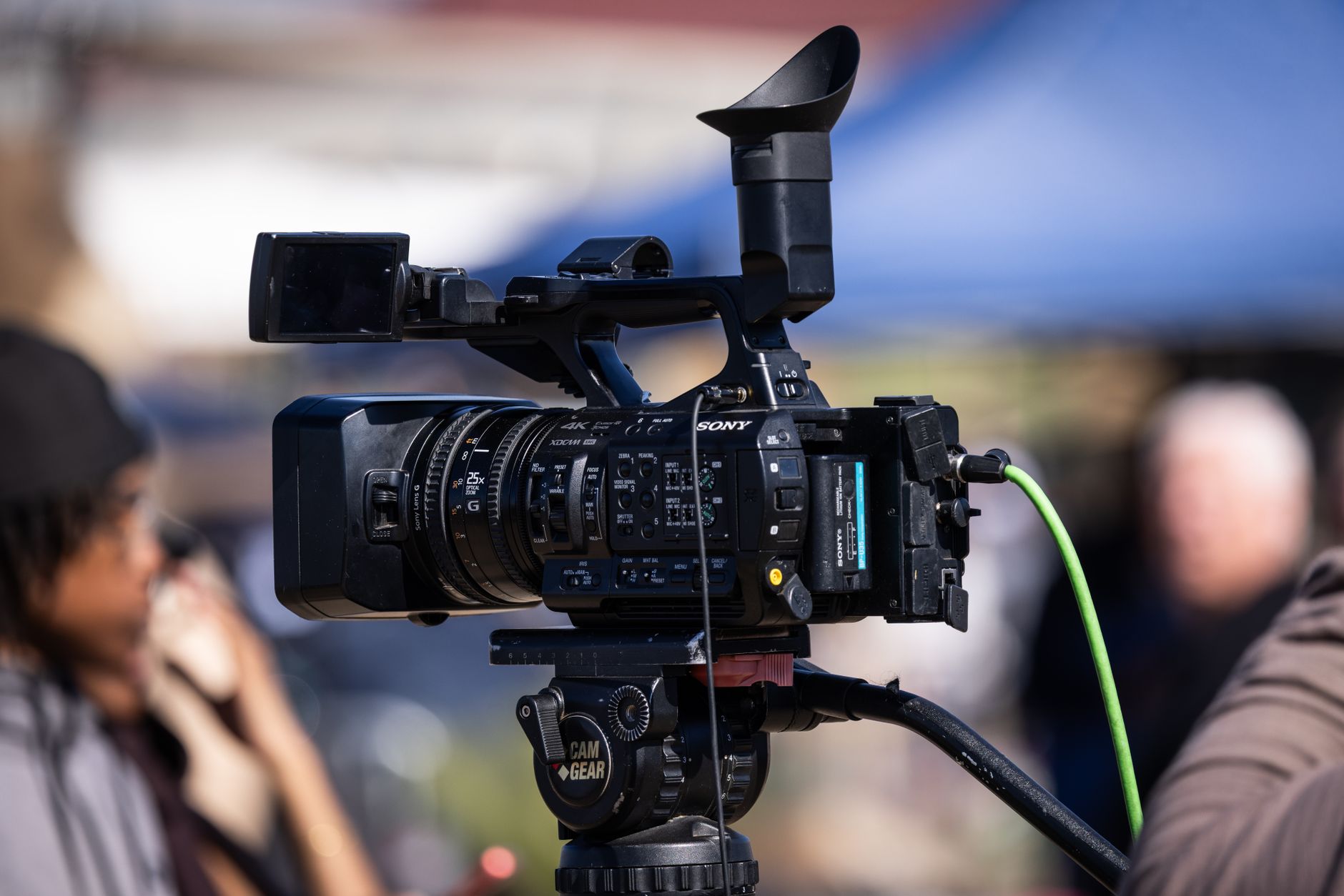
As regulatory battles loom over American broadcasters and the gaming industry faces structural decline, the ultra-luxury market continues to thrive, revealing a deeply bifurcated US economy.
The story so far
The first week of July 2026 has offered a stark portrait of the American media, technology, and consumer landscapes—a portrait defined by regulatory friction at the top and structural instability at the foundation. In the realm of broadcast media, a significant First Amendment clash has erupted. As The Verge has reported, the Disney-owned ABC television network is forcefully pushing back against the Federal Communications Commission (FCC). The agency has opened an aggressive investigation into the daytime talk show The View regarding the airtime afforded to political candidates, prompting ABC to demand that the federal government stay out of its newsrooms.
Simultaneously, the broader technology and entertainment sectors are exhibiting signs of deep distress, masked only slightly by iterative consumer hardware marketing. The Verge has bluntly declared the current state of Microsoft's Xbox brand a "disaster," highlighting a bleak reality for the broader video game industry, which continues to grapple with unsustainable development costs and stagnant subscription growth. Yet, the tech media apparatus continues its familiar hype cycles; CNET recently launched the second round of its "Guessing Game," encouraging readers to predict upcoming Apple news events to win a new Apple Watch, underscoring a consumer tech environment increasingly reliant on incremental hardware updates rather than paradigm-shifting innovation.
Meanwhile, the automotive industry highlights the staggering socioeconomic extremes of the current US market. While everyday commuters grapple with persistent inflation and high interest rates—often seeking refuge in the reliable, efficient engineering of a compact Mazda 3—the upper echelons of the market are playing a different game entirely. Road & Track recently tested the 2027 Mercedes-Maybach S580, concluding that its new flat-plane V-8 engine provides enough ultra-luxury performance to justify choosing it over the range-topping V-12, cheekily calling it "good news for tight-fisted billionaires." And in a moment of cosmic irony that puts all terrestrial economic woes into perspective, Wired highlighted a new astronomical study suggesting that in roughly 5 billion years, the Earth may actually avoid being swallowed by the Sun during our star's fiery demise.
Why this matters
This confluence of events is far more than a random assortment of summer headlines; it represents a critical inflection point for the global economy's most influential market. The US video game industry alone is a massive driver of technological investment, contributing to a global market valued at over $180 billion. When legacy titans like Xbox stumble, the ripple effects are felt across semiconductor manufacturing, software engineering, and global tech hiring. Furthermore, the FCC's unprecedented pressure on ABC signals a dangerous politicization of media regulation. When government agencies attempt to leverage broadcast licensing to dictate the editorial decisions of daily programming, it threatens the foundational independence of the American press, creating a volatile environment for both domestic voters and international investors.
Editorial analysis
To understand the current American trajectory, one must look at the widening gap between the realities of the corporate elite and the everyday consumer. The FCC's investigation into The View is a particularly alarming development in First Amendment jurisprudence. Historically, the "Equal Time" rule has been applied with a careful understanding of the difference between bona fide news interviews and explicit political campaigning. By turning the regulatory apparatus toward a highly-rated daytime talk show, the government is signaling a willingness to weaponize bureaucratic oversight to chill political discourse. For a network like ABC, complying with such aggressive federal oversight could set a precedent that severely limits how political news is digested by the American public. It is a striking reminder that even in an era of decentralized digital media, legacy broadcast networks remain vulnerable to state pressure.
In the technology sector, the juxtaposition of Xbox's structural failures and Apple's perpetual hardware marketing loop exposes a fundamental exhaustion in consumer tech. The "disaster" at Xbox—characterized by studio closures, massive layoffs, and a failing game-pass economic model—is indicative of a structural industry contraction. For years, tech giants utilized essentially free capital to acquire vast portfolios of intellectual property, assuming infinite subscriber growth. That bubble has now burst. Yet, rather than reckoning with this stagnation, the broader tech ecosystem distracts itself with the superficial engagement of Apple Watch giveaways and iterative product launches. The innovation engine that once defined Silicon Valley is currently sputtering, replaced by a desperate need to maintain hardware upgrade cycles among an increasingly weary middle class.
This brings us to the ultimate symbol of consumer bifurcation: the physical products Americans are driving. Automotive journalism frequently celebrates the engineering marvels of vehicles like the 2027 Mercedes-Maybach S580. The introduction of a flat-plane V-8 in an ultra-luxury land yacht is a fascinating mechanical feat, but framing a $200,000-plus vehicle as a "value" proposition borders on the absurd when viewed from the ground level of the American economy. For the vast majority of consumers, including the millions of immigrant professionals and middle-class families navigating suburban commutes, the gold standard of the automotive market is not a Maybach, but a Mazda 3. The Mazda 3 represents practical, reliable, and accessible engineering—a shrinking commodity in a market obsessed with luxury margins and bloated electric SUVs. The divergence between the Maybachs of the world and the Mazda 3s perfectly encapsulates an American economy that is increasingly designed to cater exclusively to the highest bidder, leaving the practical needs of the working public as an afterthought.
What to watch next
For those monitoring the stability of the US tech and media markets, several key developments will demand close attention over the coming months:
- The FCC's formal ruling on ABC: Watch for whether the Federal Communications Commission issues formal fines or merely a warning regarding The View. Any punitive action will likely trigger an immediate, high-profile First Amendment lawsuit from Disney's legal team, setting up a Supreme Court battle.
- Microsoft's upcoming Q3 earnings call: The company will be forced to address the financial realities of its Xbox division. Analysts will be listening closely for any announcements regarding further studio liquidations or a strategic pivot away from proprietary hardware entirely.
- The fall automotive pricing index: As manufacturers finalize their 2027 lineups, monitor the pricing delta between ultra-luxury models like the Mercedes-Maybach and entry-level compacts. A continued abandonment of the sub-$30,000 vehicle market will signal ongoing trouble for the American middle class.
For global readers
For the South Asian diaspora, the regulatory friction between the US government and ABC feels remarkably, and perhaps uncomfortably, familiar. In India, the Ministry of Information and Broadcasting (MIB) frequently exercises broad oversight over television news networks and digital streaming platforms, often citing national security, public order, or cultural preservation. Historically, the United States has positioned itself in stark contrast to this model, championing an almost absolutist view of press freedom. However, the FCC's willingness to investigate the political airtime of a daytime talk show suggests that the US is not immune to the global trend of state apparatuses attempting to domesticate the press. While the legal mechanisms differ—relying on bureaucratic licensing rules rather than outright censorship—the chilling effect on newsroom editors is fundamentally the same. It is a sobering reminder that the friction between state power and media independence is a universal democratic challenge.
The bottom line
The American landscape in mid-2026 is defined by its contradictions. As the scientific community assures us of the Earth's long-term survival against the sun, terrestrial industries are grappling with immediate, existential threats. From the government's encroachment on broadcast newsrooms to the collapse of legacy gaming models and an auto market fractured between Maybach billionaires and Mazda commuters, the US is navigating a perilous transition. For global observers and domestic consumers alike, the illusion of perpetual tech and media stability has been firmly shattered.
Key Takeaways
- ABC is actively resisting an FCC investigation into 'The View', citing severe First Amendment concerns regarding government interference in newsrooms.
- Microsoft's Xbox division is facing a structural crisis, reflecting a broader economic stagnation and model failure within the $180 billion video game industry.
- The consumer tech market is increasingly reliant on iterative marketing, such as Apple Watch promotional games, to mask a lack of fundamental innovation.
- The US automotive market highlights extreme socioeconomic divides, contrasting the luxury 'value' of a flat-plane V-8 Maybach with the everyday necessity of reliable compacts like the Mazda 3.
- A new astronomical study confirms that Earth will likely survive the Sun's eventual demise in 5 billion years, offering a stark cosmic contrast to daily terrestrial crises.
Frequently asked questions
What is the current state of the video game industry according to recent reports?
The FCC has opened an investigation concerning the airtime given to political candidates on the talk show, which ABC argues is an unconstitutional overreach into its editorial and newsroom independence.
Why are luxury vehicles like the Mercedes-Maybach S580 being highlighted in a struggling economy?
The industry, particularly major players like Xbox, is facing significant structural challenges, with reports describing the current situation as a 'disaster' due to unsustainable costs and failing subscription models.
What does the Mazda 3 represent in this current economic context?
The ultra-luxury market operates independently of middle-class economic pressures. While average consumers struggle with inflation, automakers continue to engineer high-margin, high-performance vehicles for ultra-wealthy buyers.
- 01Road & Track: Tested: 2027 Mercedes-Maybach S580 Combines Ultra-Luxury with Surprising Value
- 02The Verge: Xbox is a disaster
- 03Wired: Good News! Turns Out the Earth Will Never Be Swallowed by the Sun
- 04CNET: Win a New Apple Watch as CNET Guessing Game: Apple Edition Returns for Round Two
This editorial article was written by US News Desk's editorial desk using current reporting from the publishers above. All facts were grounded against these sources.