The Akoustis Dilemma: Why America's Hardware Renaissance is Faltering
The turbulent journey of a key US RF filter manufacturer exposes the harsh realities behind Washington’s semiconductor and telecom ambitions.
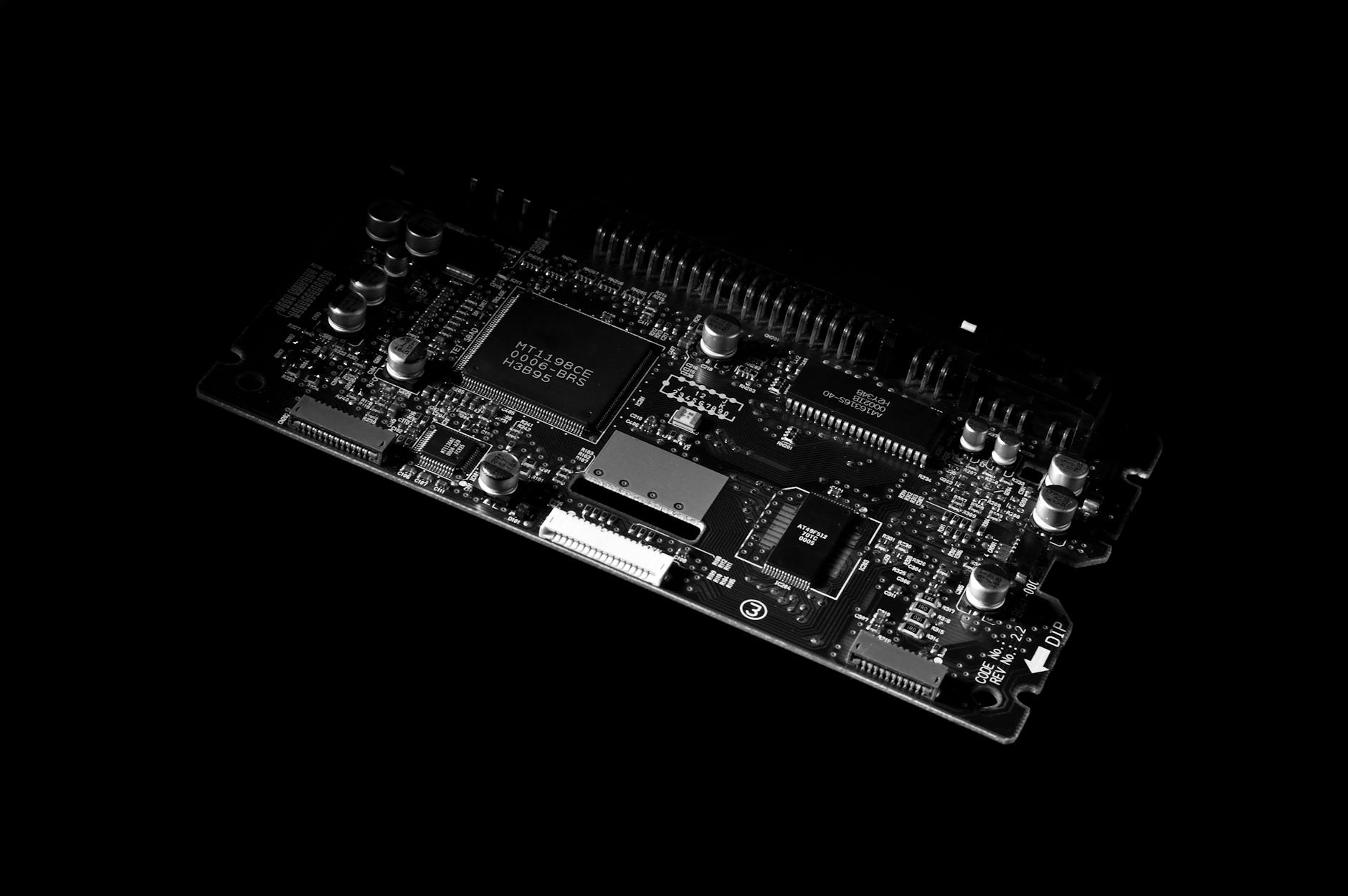
The turbulent journey of a key US RF filter manufacturer exposes the harsh realities behind Washington’s semiconductor and telecom ambitions.
The story so far
For the past decade, the dominant narrative in American technology has been defined by software, consumer electronics, and digital platforms. However, beneath the glossy keynotes and cyclical product launches lies the bedrock of modern connectivity: telecommunications infrastructure and semiconductor manufacturing. In this unglamorous but strategically vital sector, Akoustis Technologies (NASDAQ: AKTS) has emerged as a fascinating case study of the challenges inherent in rebuilding a domestic hardware supply chain.
Founded with a mission to revolutionize the radio frequency (RF) filter market, Akoustis specializes in proprietary bulk acoustic wave (BAW) technology. Operating out of a commercial fabrication facility in Canandaigua, New York, the company represents the exact type of enterprise the US government aims to champion through initiatives like the CHIPS and Science Act. They design and manufacture the microscopic filters that allow smartphones, enterprise routers, and defense communication systems to function without catastrophic signal interference.
Yet, operating as a commercial-stage hardware innovator in mid-2026 is an increasingly fraught endeavor. The broader technology landscape is facing significant consumer headwinds. As The Verge recently reported, major sectors of consumer tech are struggling with deep systemic issues, with flagship platforms like Xbox described as being in a "disaster" state amid a broader video game industry slump. Simultaneously, consumer hardware giants are leaning heavily on safe, iterative updates—a trend underscored by publications like CNET running guessing games for predictable cyclical releases like the newest Apple Watch. With consumer tech stagnating, the strategic battleground has firmly shifted to infrastructure and enterprise hardware, placing an enormous, high-stakes burden on specialized domestic suppliers like Akoustis to perform against aggressive global incumbents and navigate brutal intellectual property litigation.
Why this matters
To understand the significance of a company like Akoustis, one must understand the physical constraints of modern wireless communication. As the world rapidly adopts 5G, Wi-Fi 6E, and Wi-Fi 7 protocols, the global airwaves are becoming exponentially more crowded. These advanced networks operate at incredibly high frequencies—specifically in the 5 GHz to 7 GHz spectrum—where designated channels are packed tightly together. Without highly precise, temperature-stable RF filters to isolate these specific signals, a smartphone attempting to stream high-definition video would be completely drowned out by the noise of neighboring routers, IoT devices, and municipal cell towers.
This is not a niche market; the global RF filter market is massive, projected to easily exceed $20 billion by the end of the decade. More importantly, it is a critical bottleneck technology. A nation cannot claim true technological sovereignty or secure its defense communications if it relies entirely on foreign foundries for the acoustic filters that manage its spectrum. Akoustis, with its patented XBAW technology and domestic New York fab, was positioned to be a crucial node in a secure, American-made telecom supply chain. However, the immense financial pressure of scaling hardware, subsequent capitalization hurdles, and relentless IP battles highlight a systemic vulnerability in the current tech ecosystem. Building a semiconductor facility is only the first step; surviving the geopolitical and corporate realities of the global hardware market is the true test.
Editorial analysis
There is a glaring contradiction at the heart of current US industrial policy. Policymakers in Washington routinely champion the necessity of onshoring semiconductor manufacturing and securing critical telecommunications supply chains against foreign disruption. Yet, the bureaucratic and financial ecosystems required to sustain mid-tier innovators are severely misaligned. We are witnessing an era where federal attention and resources are frequently scattered, often prioritizing high-profile political theater or legacy media disputes over structural economic support for the foundational technology sector.
Consider the current regulatory climate in Washington. As The Verge recently highlighted, federal agencies like the Federal Communications Commission (FCC) are currently expending significant administrative bandwidth investigating major news networks, with ABC forcefully pushing back against government intrusion into newsrooms following scrutiny over The View's airtime of political candidates. When the federal apparatus is bogged down in First Amendment skirmishes and policing broadcast television, it inevitably loses focus on the complex, vital task of protecting and nurturing the domestic hardware ecosystem. The regulatory state is misallocating its most precious resource: attention.
Furthermore, we are seeing a broader shifting of federal priorities and physical assets that underscores this disjointed approach. As Engadget reported this week in a rare moment of ecological optimism, NASA has officially transferred ownership of a massive Maryland woodland to the US Fish and Wildlife Service. While this inter-agency land transfer is a sensible rationalization of environmental resources, the US government desperately needs a similar, aggressive rationalization of its economic and technological resources. Pouring subsidies into multi-billion-dollar fabrication plants for behemoths is politically popular, but failing to protect the specialized ecosystem of smaller suppliers—the very companies that provide the niche components those giants rely on—renders the entire supply chain fragile.
According to Wired, new astronomical studies suggest that the Earth will likely survive the sun's eventual transition into instability some 5 billion years from now. It is a comforting, albeit distant, scientific revelation. Unfortunately, domestic hardware innovators do not have a five-billion-year runway. They operate on brutal, quarter-to-quarter timelines in a capital market that currently heavily penalizes hardware development in favor of software margins. If the US wants to avoid being permanently eclipsed by state-subsidized Asian manufacturing, it must reform how it protects domestic intellectual property, provides bridge capital to critical infrastructure firms, and ensures that government defense contracts flow efficiently to homegrown suppliers.
What to watch next
For policymakers, tech workers, and telecom investors, the trajectory of domestic RF filter manufacturing over the next 18 months will serve as a bellwether for the broader hardware industry. Key developments to monitor include:
- Phase two CHIPS Act disbursements: Watch closely to see if federal funding mandates begin to trickle down from the mega-fabs to specialized component manufacturers and commercial-stage material science firms.
- Intellectual property precedent: Track upcoming rulings from the US International Trade Commission (ITC) and federal appellate courts regarding patent infringement in the Bulk Acoustic Wave (BAW) sector, which will determine whether small innovators can defend their IP moats against industry giants.
- Defense procurement shifts: Pay attention to Department of Defense spending bills, specifically mandates requiring the use of domestically fabricated RF filters in next-generation tactical radios and secure satellite communications arrays.
- Enterprise Wi-Fi 7 adoption: Monitor the earnings calls of enterprise router manufacturers for demand signals; a faster-than-expected rollout of Wi-Fi 7 infrastructure could provide the necessary order volume to stabilize the balance sheets of specialized filter suppliers.
For global readers
For the South Asian diaspora and global observers, the tribulations of US hardware manufacturing offer a vital cautionary tale, particularly for New Delhi. Driven by geopolitical necessity and an ambition to move up the global value chain, India has launched the ambitious India Semiconductor Mission (ISM), committing billions in subsidies to attract giants like Micron and foster domestic champions like Tata Electronics. Furthermore, through frameworks like the US-India initiative on Critical and Emerging Technology (iCET), both nations are attempting to build resilient, allied supply chains. The goal is to build an indigenous semiconductor ecosystem from scratch, reducing reliance on adversarial nations.
However, the structural challenges faced by mid-tier firms like Akoustis demonstrate that capital expenditure is merely table stakes. Even in the United States—with its mature capital markets, advanced research institutions, and immense defense budget—innovative domestic manufacturers struggle to survive the brutal economics of scale and incumbent IP monopolies. If a US company operating a New York fab and holding crucial patents faces existential market threats, India’s nascent semiconductor players will face an exponentially steeper climb. For New Delhi, the lesson is clear: subsidizing factory construction is insufficient. A successful industrial policy requires aggressive protection of domestic intellectual property, the cultivation of guaranteed local demand through infrastructure projects, and a regulatory environment that shields smaller strategic firms from predatory pricing by global incumbents.
The bottom line
The survival and stabilization of specialized component manufacturers like Akoustis Technologies is not just a matter of free-market capitalism taking its course; it is a direct reflection of whether western democracies can successfully architect and protect the complex supply chains of the future. If the US cannot sustain the mid-tier innovators building the invisible infrastructure of the wireless age, its broader ambitions of technological sovereignty will remain fundamentally incomplete.
Key Takeaways
- Akoustis Technologies serves as a primary example of the difficulties in establishing a domestic US hardware and semiconductor supply chain.
- The global market for RF filters is projected to exceed $20 billion, making it a critical bottleneck for 5G and Wi-Fi 7 rollouts.
- The US tech sector is seeing a massive shift in focus from stagnating consumer hardware toward critical infrastructure and enterprise connectivity.
- Regulatory distractions at federal agencies risk undermining the structural support needed for mid-tier technology manufacturers to survive.
- India's Semiconductor Mission can learn from the US experience: factory subsidies must be paired with strong IP protection and guaranteed local demand.
Frequently asked questions
What is an RF filter and why is it important?
An RF (radio frequency) filter is a microscopic component used in wireless devices to isolate specific signal frequencies. It prevents interference between crowded networks like 5G and Wi-Fi, ensuring clear communication and fast data transfer.
How does this impact the broader US semiconductor strategy?
While the US is investing heavily in massive fabrication plants through the CHIPS Act, the supply chain remains vulnerable if mid-tier, specialized component manufacturers cannot survive market pressures and patent litigation.
What can global tech ecosystems learn from the US hardware market?
Emerging tech hubs, such as India under its Semiconductor Mission, must recognize that building factories is only the first step. Long-term success requires robust intellectual property protections, access to patient capital, and strategic government procurement.
- 01The Verge: Xbox is a disaster
- 02Wired: Good News! Turns Out the Earth Will Never Be Swallowed by the Sun
- 03CNET: Win a New Apple Watch as CNET Guessing Game: Apple Edition Returns for Round Two
- 04Engadget: NASA transfers ownership of Maryland woodland to the US Fish and Wildlife Service
This editorial article was written by US News Desk's editorial desk using current reporting from the publishers above. All facts were grounded against these sources.