The Silent 5G Battle: Akoustis and the Future of US Hardware
While consumer tech dominates summer headlines, the invisible struggle to manufacture critical RF filters reveals deep supply chain vulnerabilities.
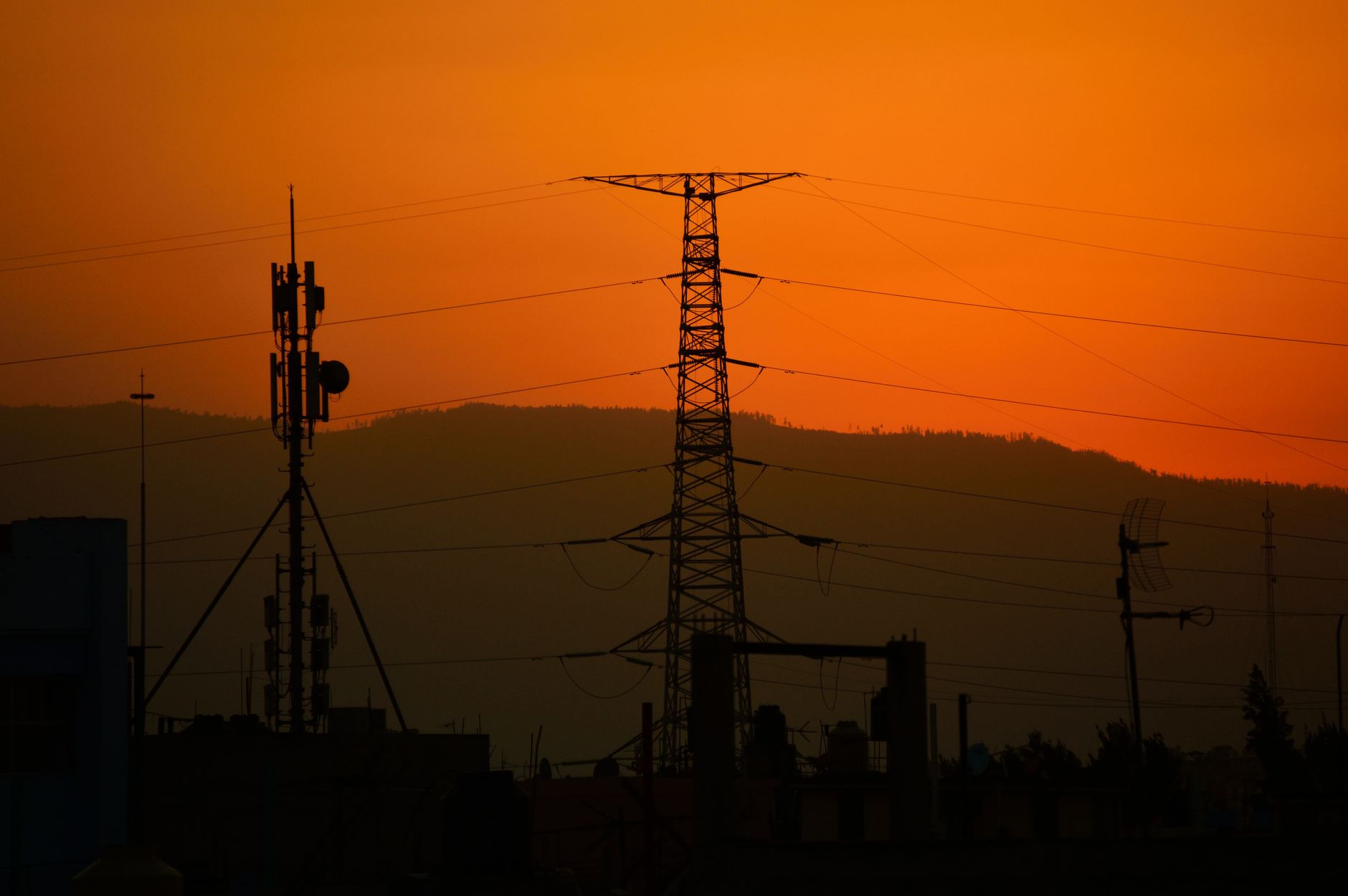
While consumer tech dominates summer headlines, the invisible struggle to manufacture critical RF filters reveals deep supply chain vulnerabilities.
The story so far
If you were to glance at the technology headlines in early July 2026, you might assume the industry’s most pressing concerns revolve around consumer entertainment and legacy media disputes. Tech media continues its cyclical focus on retail devices, with outlets like CNET running guessing games for the next iterations of the Apple Watch, while The Verge recently published a blistering critique declaring the current state of Microsoft’s Xbox division a "disaster." Meanwhile, in the regulatory sphere, the Federal Communications Commission (FCC) has found itself in a high-profile spat with ABC over an investigation into the airtime of political candidates on The View, prompting the network to firmly demand the government stay out of its newsrooms.
Yet, beneath this noisy surface of gaming hardware struggles and broadcast television politics lies a much quieter, fundamentally more critical narrative about the physical infrastructure that makes modern digital life possible. At the center of this narrative are companies like Akoustis Technologies, a pure-play manufacturer of specialized radio frequency (RF) filters. Founded as a university spin-off and operating a micro-electromechanical systems (MEMS) fabrication facility in Canandaigua, New York, Akoustis represents the sharp edge of the United States' attempt to maintain domestic sovereignty over critical telecommunications components. The company specializes in patented Bulk Acoustic Wave (BAW) technology—specifically XBAW—which is the microscopic gatekeeper that allows smartphones, Wi-Fi routers, and defense systems to function in an increasingly crowded electromagnetic spectrum.
The trajectory of Akoustis—navigating the brutally capital-intensive world of semiconductor and MEMS manufacturing against established global behemoths—serves as a bellwether for the broader US hardware ecosystem. While government agencies are occasionally seen managing physical and environmental assets with long-term strategic vision—such as NASA’s recent and widely praised transfer of a Maryland woodland to the US Fish and Wildlife Service—the strategic management of the nation’s silicon and micro-acoustic supply chains remains dangerously fragmented. As we look at the tech landscape of 2026, the struggle of domestic mid-cap hardware innovators to achieve sustainable scale is the most important story you aren't reading about.
Why this matters
To understand the significance of Akoustis, one must understand the physics of modern connectivity. As the world transitions deeper into the 5G era and rapidly adopts the new Wi-Fi 7 standard, the invisible radio spectrum has become incredibly congested. Every time you stream a high-definition video, join a secure video conference, or connect a smart vehicle to a city grid, your device is being bombarded by a chaotic symphony of stray radio waves. RF filters are the microscopic bouncers at the door of your device's receiver, blocking unwanted frequencies while allowing the exact required signal to pass through. Without advanced filters, the massive data speeds promised by next-generation networks are physically impossible due to interference.
Historically, Surface Acoustic Wave (SAW) filters managed lower frequencies, but the ultra-high frequencies demanded by 5G and Wi-Fi 7 (particularly the wide 320 MHz channels operating in the 6 GHz to 7 GHz bands) require Bulk Acoustic Wave (BAW) filters. These components rely on advanced piezoelectric materials, such as single-crystal aluminum nitride, to convert electrical signals into acoustic waves and back again with minimal signal loss. The global market for these RF filters is projected to be worth tens of billions of dollars by the end of the decade, yet the production capability is heavily consolidated among a few massive conglomerates like Broadcom, Qorvo, and Murata. A robust, domestic pure-play alternative like Akoustis is critical for supply chain resilience. If the United States loses its capacity to independently design and manufacture high-performance BAW filters, it effectively loses control over the foundational hardware of modern telecommunications, leaving both consumer networks and sensitive defense communications vulnerable to foreign supply bottlenecks.
Editorial analysis
The ongoing saga of domestic semiconductor and MEMS manufacturing highlights a glaring paradox in American industrial policy. We are a nation that obsesses over the terminal endpoints of technology—we debate the cultural impact of broadcast television, we regulate the software layer, and we scrutinize the market performance of gaming consoles. We will spend immense political capital arguing over FCC interventions in newsrooms, yet we suffer from a collective blind spot regarding the foundational substrate of the digital economy. The United States has historically led the world in semiconductor design, but the brutal, margin-crushing reality of physical manufacturing has routinely been offshored or allowed to wither under the pressure of quarterly earnings expectations.
The CHIPS and Science Act was heralded as the panacea for this vulnerability, injecting billions of dollars into the domestic tech ecosystem. However, this legislation overwhelmingly favors massive, legacy foundries—the Intels and TSMCs of the world—building mega-fabs for advanced logic chips. Mid-cap companies operating in highly specialized niches like acoustic wave filters often find themselves navigating a treacherous "valley of death." They possess cutting-edge, DARPA-validated technology and the patriotic ambition to manufacture on American soil, but they lack the limitless capital required to weather the cyclical downturns of the mobile handset market. When a specialized US hardware firm faces financial restructuring or bankruptcy, it isn't just a loss for shareholders; it represents the evaporation of irreplaceable institutional knowledge and highly specialized manufacturing capabilities.
Furthermore, this dynamic exposes a philosophical inconsistency in how the US government manages its strategic assets. Consider the recent news of NASA transferring ownership of a Maryland woodland to the US Fish and Wildlife Service. This is a clear, coordinated action by the federal government to preserve a physical, environmental asset for the long-term public good. It is a rare moment of institutional foresight, proving that the government can, in fact, act to protect vital resources. Yet, when it comes to the "digital woodlands"—the intellectual property and domestic fabrication facilities required for secure 5G communications—federal support is often disjointed, leaving critical mid-sized innovators to the mercy of predatory market forces or foreign acquisition.
We must ask ourselves what kind of technological superpower the United States intends to be in the late 2020s. It is easy to take a detached, long-term view of existential threats—much like the recent astrophysical study reported by Wired, which reassuringly concluded that the Earth will likely never be swallowed by the Sun in five billion years. But the threats to our telecommunications supply chain do not operate on a billion-year timeline; they are happening right now, in the quarterly earnings reports of companies trying to keep their cleanrooms operational in upstate New York. If we do not cultivate a financial and regulatory environment that supports the entire stack of domestic hardware manufacturing—from the largest logic foundries down to the specialized RF filter fabs—we will remain fundamentally dependent on fragile, trans-Pacific supply chains.
What to watch next
For investors, policymakers, and technologists monitoring the health of the telecommunications supply chain, the following developments will be critical over the next few quarters:
- Wi-Fi 7 Adoption Rates in Enterprise Hardware: As major enterprise router manufacturers roll out Wi-Fi 7 access points, pay close attention to the teardowns. The inclusion of domestic XBAW filters versus legacy components will indicate whether niche US manufacturers are successfully capturing market share in the high-margin enterprise sector.
- Defense and Aerospace Contract Awards: The Department of Defense and DARPA have a vested interest in secure, domestically sourced RF components for radar and secure communications. Watch for specialized government grants or procurement contracts aimed at sustaining MEMS fabrication facilities on US soil.
- Consolidation in the RF Sector: If smaller, pure-play filter manufacturers struggle with cash flow, they become prime targets for acquisition. Monitor whether regulatory bodies like the FTC will allow large incumbents (such as Qorvo or Broadcom) to absorb these smaller domestic players, which could stifle long-term innovation in acoustic wave technology.
- State-Level Manufacturing Incentives: With federal CHIPS funding largely allocated to mega-projects, keep an eye on states like New York and Texas offering localized tax incentives and utility subsidies to keep mid-cap semiconductor and MEMS facilities operational and competitive.
For global readers
For the South Asian diaspora and global observers, the struggle to maintain domestic RF filter manufacturing in the US offers a vital lesson for India’s own technological ambitions. New Delhi has embarked on a massive, heavily subsidized initiative—the India Semiconductor Mission (ISM)—aimed at transforming the country into a global electronics manufacturing hub. We are already seeing the fruits of this with the Tata Group constructing massive fabrication facilities in Dholera, Gujarat, and assembly plants in Assam. However, India's current focus is largely on trailing-edge logic chips, memory assembly, and the final packaging of consumer devices.
The story of companies like Akoustis demonstrates that true technological sovereignty requires more than just assembling smartphones or printing basic silicon; it requires mastering the incredibly complex, niche components like Bulk Acoustic Wave filters that dictate device performance. If India wants to build a fully indigenous 5G or 6G smartphone, it cannot rely solely on importing RF front-end modules from the US or China. The engineers of the Indian diaspora currently lead many of the design teams in US telecom firms, and bridging this gap will require transferring not just software expertise, but deep materials science and MEMS manufacturing capabilities back to the subcontinent. The American difficulty in sustaining mid-cap hardware innovators serves as a cautionary tale: capital subsidies alone are not enough; you must foster an entire ecosystem of patient capital and specialized engineering talent to survive the brutal economics of hardware.
The bottom line
While the media landscape remains captivated by the latest consumer gadget rumors, video game industry turbulence, and high-profile broadcast disputes, the true foundation of our digital future is being forged in specialized fabrication facilities. Securing the production of advanced RF filters is not merely an obscure engineering challenge; it is a critical mandate for national security and supply chain sovereignty in an increasingly wireless world.
Key Takeaways
- While consumer technology dominates the news cycle, specialized hardware like RF filters are the invisible, critical bottlenecks of the modern digital economy.
- Companies like Akoustis Technologies, which manufacture Bulk Acoustic Wave (BAW) filters, are essential for the performance of 5G and Wi-Fi 7 networks.
- US industrial policy, despite the CHIPS Act, often leaves mid-cap semiconductor and MEMS manufacturers vulnerable to brutal market economics.
- The US government's ability to protect strategic environmental assets, like NASA's recent land transfer, contrasts sharply with its fragmented approach to domestic hardware sovereignty.
- For India's growing semiconductor mission, the US experience proves that true tech sovereignty requires mastering niche components like RF filters, not just basic silicon logic.
Frequently asked questions
An RF (Radio Frequency) filter is a microscopic component used in electronic devices to block unwanted radio signals and allow specific, desired frequencies to pass through, which is crucial for clear communications.
Why are BAW filters important for 5G?
Bulk Acoustic Wave (BAW) filters are highly effective at isolating signals at ultra-high frequencies. As 5G and Wi-Fi 7 utilize higher and more crowded frequency bands, traditional filters fail to prevent interference, making advanced BAW technology essential.
How does this relate to India's tech sector?
India is investing heavily in its own semiconductor manufacturing. The challenges faced by US companies in producing specialized components like RF filters serve as a roadmap and a cautionary tale for India's goal of achieving complete hardware sovereignty.
- 01The Verge: Xbox is a disaster
- 02Wired: Good News! Turns Out the Earth Will Never Be Swallowed by the Sun
- 03CNET: Win a New Apple Watch as CNET Guessing Game: Apple Edition Returns for Round Two
- 04Engadget: NASA transfers ownership of Maryland woodland to the US Fish and Wildlife Service
This editorial article was written by US News Desk's editorial desk using current reporting from the publishers above. All facts were grounded against these sources.