The Decline of the Nissan Altima and the Missing Middle in American Auto
As the EV transition accelerates globally, the uncertain future of staple commuter sedans reveals a widening gap in affordable mobility.
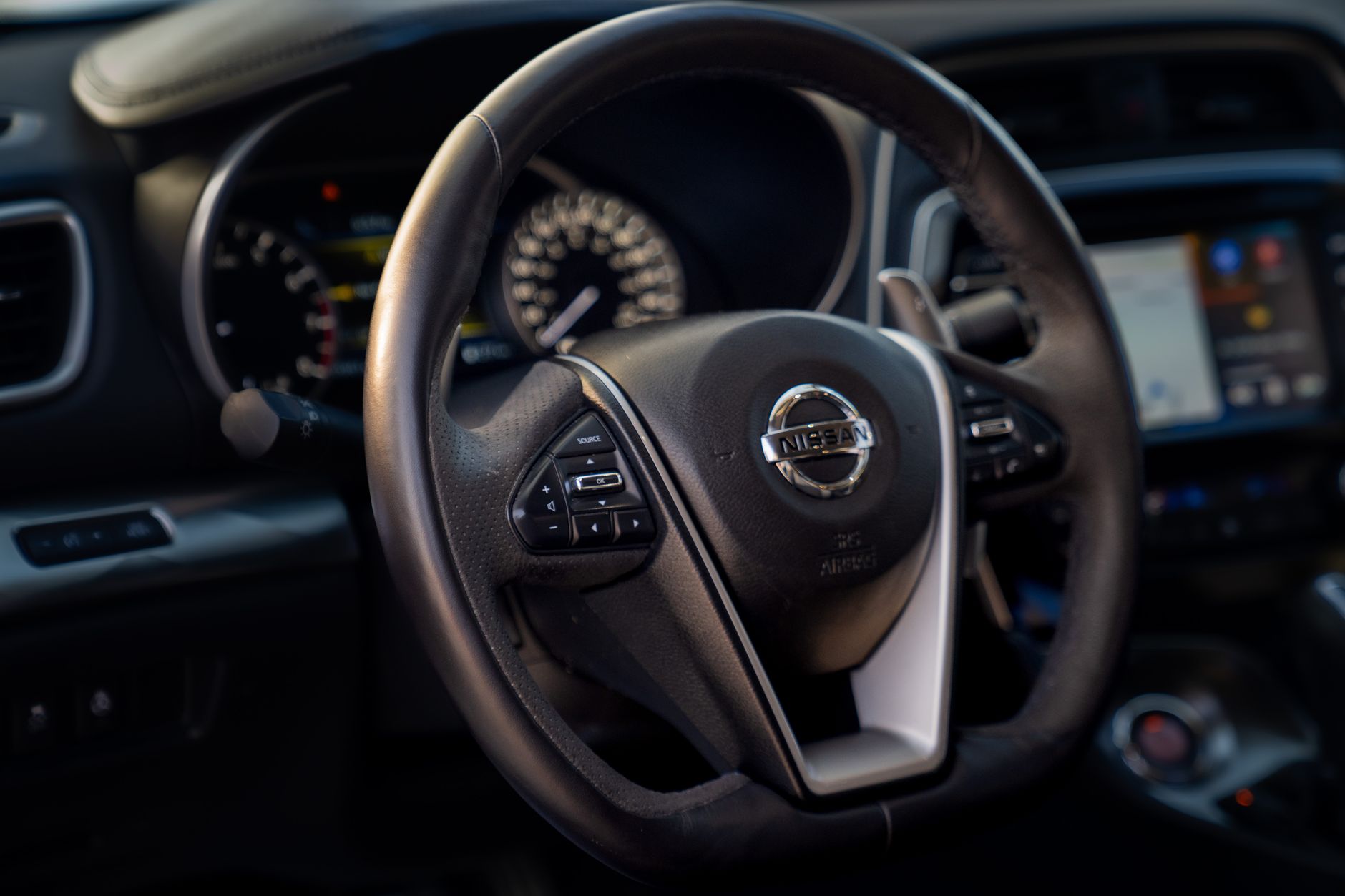
As the EV transition accelerates globally, the uncertain future of staple commuter sedans reveals a widening gap in affordable mobility.
The story so far
The American automotive landscape is currently undergoing a structural transformation that threatens to leave the traditional midsize sedan behind. For decades, the Nissan Altima has served as a foundational pillar of Nissan’s North American strategy, offering a reliable bridge between the entry-level Sentra and the flagship Maxima. However, as consumer preferences overwhelmingly pivot toward compact crossovers and SUVs, and regulatory pressures force automakers to invest billions in electric vehicle architectures, the Altima finds itself in a precarious position. Recent industry whisperings suggest that Nissan may soon phase out its gas-powered midsize sedans entirely, though the automaker has historically remained tight-lipped about definitive end dates for its legacy ICE (internal combustion engine) nameplates.
This localized American transition is occurring against a backdrop of severe global manufacturing pressures for the Yokohama-based automaker. The complexities of transitioning away from mass-market combustion vehicles are heavily compounded by international trade policies. As the Society of Motor Manufacturers and Traders (SMMT) has recently warned, impending European Union regulations threaten to create a critical tariff cliff edge for electric vehicles. This bureaucratic hurdle directly endangers the competitiveness of vehicles manufactured in the UK under strict rules of origin, including the electric Nissan Leaf, alongside models from Land Rover and Bentley. Nissan is thus fighting a war on two fronts: managing the decline of its ICE volume sellers in the US, while simultaneously navigating a heavily politicized and tariff-burdened EV rollout abroad.
Meanwhile, the cultural footprint of Nissan's golden era of internal combustion remains highly visible, even as its everyday commuter cars face the chopping block. The brand's high-performance legacy continues to capture the public imagination—perhaps best illustrated by the enduring popularity of scale models like the Lego Technic 2 Fast 2 Furious Nissan Skyline GT-R, which recently became a top-selling automotive nostalgia item on Amazon at a discounted $111.99. Yet, this enthusiast affection for Nissan’s past stands in stark contrast to the utilitarian, highly corporatized reality of the brand's current showroom floors, where the Altima has long done the heavy lifting of keeping the company's baseline volume numbers afloat.
Why this matters
The potential sunsetting of vehicles like the Nissan Altima is not merely a product cycle update; it represents a fundamental shift in the economics of American transportation. For a vast swath of the American working and middle classes, the midsize sedan has long been the primary gateway to reliable, new-car ownership. Today, the new vehicle market is increasingly bifurcating. At the top end, ultra-luxury manufacturers are catering to the exceptionally wealthy—as seen with the impending arrival of the 2027 Mercedes-Maybach S580, which introduces a flat-plane V-8 engine that reviewers at Road & Track note is robust enough to justify selection over the traditional V-12. Yet, for the everyday commuter, the departure of the $26,000 Altima leaves a vacuum that is rarely filled by comparably priced EVs. As automakers chase higher profit margins in the luxury and SUV segments, the affordable, dependable family sedan is being systematically erased from the market, quietly pricing millions of Americans out of the new-car ecosystem entirely.
Editorial analysis
To understand the gravity of the Nissan Altima’s current predicament, one must look at the unique role it has played in the American automotive ecosystem over the past two decades. Unlike the Honda Accord or the Toyota Camry, which have historically commanded fierce brand loyalty and high retail retention rates, the Altima carved out a distinct—and sometimes controversial—niche. It became the quintessential high-volume, heavily incentivized vehicle. Nissan famously utilized the Altima to capture market share through aggressive fleet sales to rental companies and flexible financing options for subprime borrowers. This strategy successfully moved millions of units and kept assembly lines humming, but it also diluted the car's resale value and shifted its cultural perception. The Altima became known less as an aspirational family car and more as a ubiquitous, highly accessible appliance of the American road.
However, dismissing the Altima as merely an economic appliance ignores the significant engineering risks Nissan took to keep the internal combustion sedan relevant in a rapidly changing world. In recent years, the company introduced the Variable Compression Turbo (VC-Turbo) engine to the Altima lineup, a genuine engineering marvel that physically altered the piston stroke to dynamically balance performance and fuel economy. It was a billion-dollar bet on the extended future of gasoline engines. Unfortunately, this mechanical innovation arrived just as the regulatory and political winds shifted definitively toward electrification. The immense capital expenditure required to develop such ICE technologies is now largely viewed by the wider industry as a sunk cost, as government mandates and global climate targets force a rapid pivot to battery architectures.
This pivot is fraught with logistical and geopolitical hazards, precisely because building an EV requires an entirely different supply chain than building a traditional Altima. The aforementioned UK tariff cliff edge for the Nissan Leaf perfectly illustrates this dilemma. When an automaker builds a gas-powered sedan, the sourcing of steel and localized engine assembly is a mature, easily managed process with predictable margins. But with electric vehicles, complex international trade rules dictate that a significant percentage of the battery's value must be sourced locally to avoid crippling export tariffs. Because the global battery supply chain is currently dominated by Asian markets outside of Japan, legacy automakers are scrambling to establish localized battery plants in Europe and North America. Until those localized supply chains are fully operational, the mass production of affordable EVs remains highly vulnerable to political maneuvering and trade disputes. Consequently, automakers are killing off their affordable, lower-margin ICE cars like the Altima to fund EV transitions, but the EVs replacing them remain too expensive and geopolitically fragile to serve the exact same mass-market demographic.
The result is a dangerous transitional period for the global automotive industry. Nissan is attempting a delicate high-wire act: it must keep its legacy dealer networks profitable using an aging fleet of internal combustion vehicles, while simultaneously pouring scarce capital into next-generation electric platforms that are inherently less profitable due to raw material costs and looming tariff threats. The Altima sits right at the center of this tension. It is a car that is too economically crucial for dealer volumes to die today, but arguably too outdated in its fundamental consumer proposition to survive tomorrow.
What to watch next
As the automotive industry continues its turbulent transition, readers and market observers should keep a close eye on the following developments:
- Product roadmap clarity for US sedans: Over the next 12 to 18 months, track Nissan's official corporate announcements regarding the Altima's production lifecycle. A quiet reduction in Altima factory allocations will be the clearest early indicator of the nameplate’s impending demise.
- Resolutions to global EV trade rules: Watch for how multinational automakers respond to strict rules of origin in both the EU and the US (via the Inflation Reduction Act). The ability to source battery minerals locally will dictate whether affordable EVs can ever truly replace the pricing parity of the Altima.
- Market consolidation in the sub-$30,000 sector: If the Altima exits the US market, watch to see if Korean manufacturers like Hyundai and Kia, or American stalwarts utilizing budget crossover platforms, swoop in to capture Nissan’s traditional budget-conscious demographic.
For global readers
For the South Asian diaspora, the slow decline of the American midsize sedan offers a fascinating contrast to the automotive realities back home. In the United States, suburban sprawl and historically cheap gasoline allowed massive sedans to flourish for generations, only to be subsequently replaced by even larger, heavier SUVs. In India, however, the automotive market remains heavily defined by stringent sub-4-meter length tax brackets and the absolute necessity for high ground clearance to navigate developing urban infrastructure. While the US market debates the transition from a nearly five-meter-long Nissan Altima to heavy electric crossovers, the Indian market is witnessing a fierce battle among highly efficient compact SUVs and premium hatchbacks. Furthermore, legacy Japanese automakers continue to dominate the Indian market through deep manufacturing localization and hybrid technologies, offering a pragmatic middle ground that contrasts sharply with the all-or-nothing electric mandates currently reshaping the North American and European landscapes. This divergence highlights how regional policy and infrastructure ultimately dictate global mobility.
The bottom line
The anticipated sunsetting of traditional commuter sedans like the Nissan Altima is a stark reminder that the global transition to electric vehicles comes with a high collateral cost to affordability. As automakers juggle geopolitical tariff threats and multi-billion-dollar electrification mandates, the working-class American driver is left navigating a rapidly shrinking pool of accessible, reliable transportation options.
Key Takeaways
- Nissan's foundational midsize sedan, the Altima, is facing an uncertain future as the US market shifts toward SUVs and costly EV transitions.
- The broader automotive industry is bifurcating, with ultra-luxury vehicles thriving while affordable entry-level sedans are systematically eliminated.
- Strict international 'rules of origin' for EV manufacturing, such as those threatening the UK-built Nissan Leaf, complicate the affordable rollout of electric alternatives.
- Nissan used the Altima to dominate high-volume fleet sales and subprime lending markets, making its potential departure a major blow to budget-conscious buyers.
- The global transition to electric vehicles forces legacy automakers to sacrifice lower-margin internal combustion cars to fund expensive, geopolitically fragile EV supply chains.
Frequently asked questions
Is Nissan officially discontinuing the Altima?
While Nissan has not released a formal discontinuation date, industry analysts and shifting market trends strongly suggest the Altima may be phased out in the coming years as the company pivots to electric vehicles and crossovers.
Why are automakers stopping the production of midsize sedans?
Consumer demand has shifted heavily toward SUVs and crossovers. Additionally, automakers need to redirect capital away from lower-margin internal combustion sedans to fund the expensive research and manufacturing transitions required for electric vehicles.
What are 'rules of origin' and how do they affect Nissan?
Rules of origin are international trade regulations that require a certain percentage of a product's value to be sourced locally to avoid tariffs. For EVs like the Nissan Leaf, heavily relying on imported battery materials can trigger severe export tariffs, complicating global sales strategies.
- 01Road & Track: Tested: 2027 Mercedes-Maybach S580 Combines Ultra-Luxury with Surprising Value
- 02Autocar: UK warns of critical threat for EVs as tariff cliff edge looms
- 03The Verge: Xbox is a disaster
- 04Wired: Good News! Turns Out the Earth Will Never Be Swallowed by the Sun
- 05Mashable: The Lego Technic 2 Fast 2 Furious Nissan Skyline GT-R is down to its best-ever price — save over $20 at Amazon
This editorial article was written by US News Desk's editorial desk using current reporting from the publishers above. All facts were grounded against these sources.