Toyota’s $3.6 Billion Texas Pivot and the Reshaping of US Manufacturing
As the automaker pledges $3.6 billion to onshore truck production to Texas, its integration into the American industrial fabric deepens.
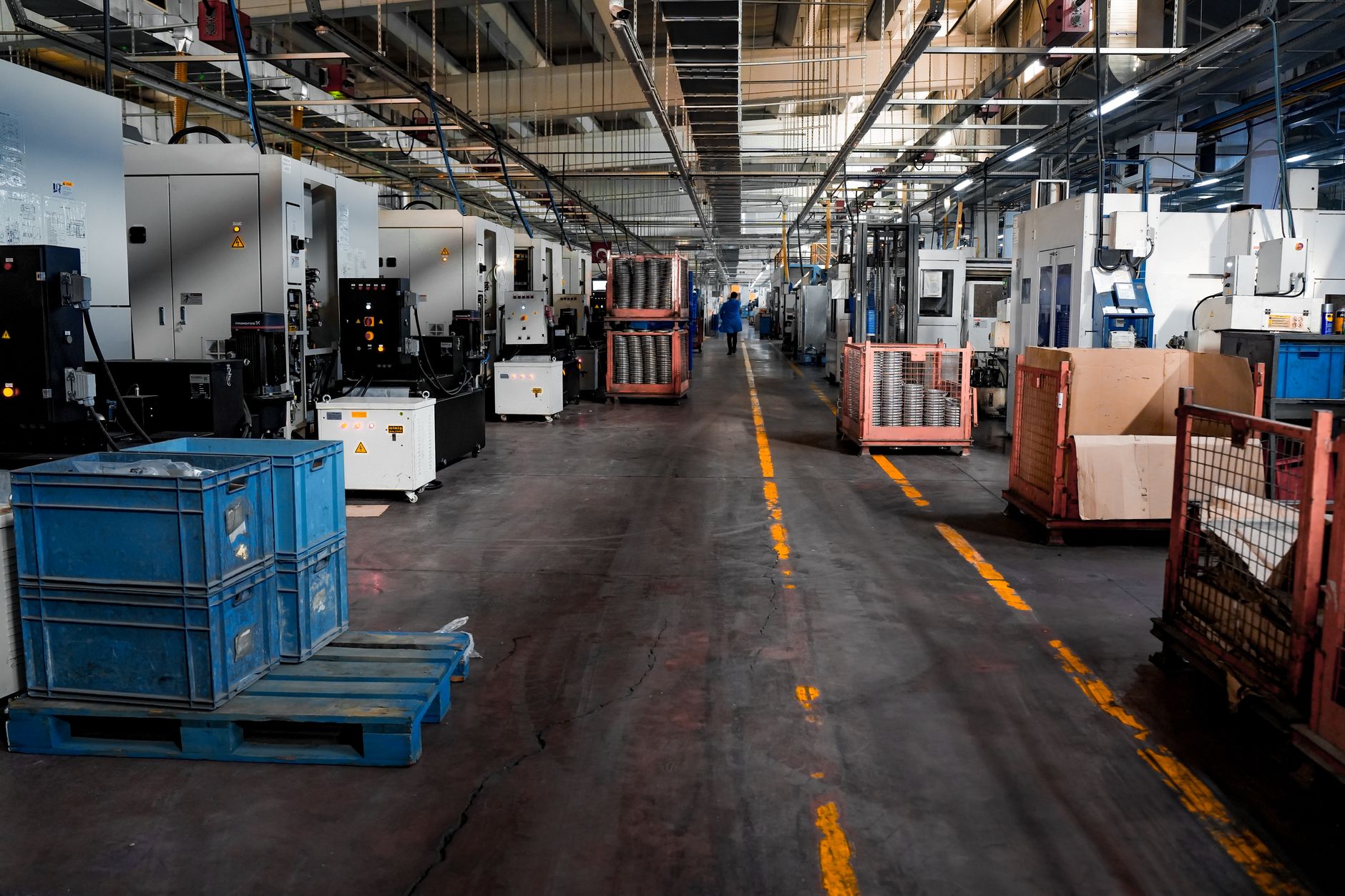
As the Japanese automaker pledges $3.6 billion to onshore truck production to Texas, its integration into the American industrial fabric reaches new heights.
For many in the global South Asian diaspora, the name Toyota is inextricably linked to the Sienna minivan—a ubiquitous, ultra-reliable chariot for multi-generational families navigating life in the American suburbs. The Sienna is a cultural touchstone, a vehicle that represents the pragmatic assimilation of immigrant families into the broader tapestry of the United States. But while the minivan represents Toyota’s mastery of American domestic life, the automaker’s latest boardroom maneuvers and aggressive cultural pushes represent something much larger. We are currently witnessing a geopolitical and industrial masterclass in localized manufacturing, as Toyota takes unprecedented steps to anchor its most profitable operations firmly within the borders of the United States.
Rather than resting on its laurels as a provider of sensible family transport, Toyota is fundamentally reshaping its footprint in North America. By shifting massive amounts of capital back to American soil, dominating inherently American motorsports, and continuing to court high-performance combustion enthusiasts in an increasingly electrified era, the automaker is rewriting the playbook for how a foreign entity operates in the modern industrial age.
The story so far
In a seismic shift for the North American automotive landscape, Toyota is currently executing a massive realignment of its manufacturing priorities. According to a July 2026 report from Car and Driver, the automaker is investing a staggering $3.6 billion to relocate production of its highly popular Tacoma mid-size pickup truck back to San Antonio, Texas. This represents a major reversal of prior corporate strategy, as the Tacoma had been exclusively assembled in Mexico since 2021 to take advantage of lower operational costs.
Simultaneously, the brand is asserting overwhelming dominance in the cultural heartland of American motorsport. Over the long Fourth of July weekend, at NASCAR's highly anticipated return to Chicagoland, Toyota vehicles claimed a remarkable seven of the top ten spots at the front of the pack. As Road & Track reported, this dominant showing set the stage for an intense "Midwest bar burner," culminating in Chase Briscoe celebrating from victory lane.
Beyond trucks and stock cars, Toyota is actively reminding the world of its engineering breadth and heritage. On the performance front, Autocar has revealed that Toyota is preparing to debut a brand-new V8 supercar at the upcoming Goodwood Festival of Speed, scheduled for July 9 through July 12. This aggressive push into emotional, high-displacement performance stands in stark contrast to the broader industry's pivot to quiet electrification, though even ultra-luxury brands are recognizing the enduring appeal of eight cylinders—as seen in Road & Track's recent testing of the 2027 Mercedes-Maybach S580 and its new flat-plane V-8. And underneath all of this forward momentum, the foundation of Toyota's brand identity—unbreakable reliability—continues to write its own marketing copy. A recent viral video covered by The Drive showcased a moss-covered, long-abandoned Toyota Land Cruiser firing up with minimal effort, proving yet again that the company's legacy of durability remains unmatched in the public consciousness.
Why this matters
The decision to inject $3.6 billion into the Texas economy is not merely a localized business update; it is a bellwether for the future of global trade and industrial policy. For over two decades, the prevailing narrative in automotive manufacturing has been one of offshoring—moving production southward to Mexico to capitalize on significantly lower labor costs while remaining within the tariff-free boundaries of the USMCA (and formerly NAFTA). By pulling the Tacoma assembly line back across the border, Toyota is signaling to the global market that supply chain resilience and proximity to the primary consumer base now outweigh the traditional calculus of cheap labor arbitrage.
This capital injection matters because it physically anchors Toyota to the political and economic fortunes of the United States. A $3.6 billion investment guarantees thousands of direct manufacturing jobs, spurs the creation of a massive secondary market of local parts suppliers, and builds immense political goodwill in Washington. In an era where international supply chains are increasingly vulnerable to geopolitical shocks, port strikes, and sudden border disruptions, onshoring the production of the brand's most critical mid-size truck acts as a massive insurance policy against global volatility.
Editorial analysis
To fully grasp the magnitude of Toyota's current strategy, one must examine the intersection of trade economics, political maneuvering, and cultural integration. First, consider the raw economics of the Texas pivot. Moving an established vehicle platform as crucial as the Tacoma—a vehicle that practically defines the mid-size truck segment in North America—is an undertaking fraught with engineering complexity and immense upfront costs. When Toyota originally shifted all Tacoma production to its Mexican facilities in 2021, financial analysts largely praised the move as a necessary optimization to protect profit margins in a highly competitive sector.
Reversing that decision just five years later suggests a profound shift in how Toyota views the long-term stability of cross-border trade. Automakers operate on decade-long product cycles; they do not spend $3.6 billion reactively. This move indicates a calculated assumption that the era of frictionless global trade is ending. Corporate boardrooms are increasingly wary of the shifting sands of global alliances, and the looming threat of protectionist trade policies is a reality regardless of which political party holds power in Washington. By deeply embedding its truck production within Texas, Toyota effectively inoculates itself against potential future border tariffs, customs delays, or political disputes between the US and Mexico. It is an expensive play for stability, securing the brand's most rugged and culturally significant product line right in the backyard of its primary buyers.
Second, we must examine the brilliant soft-power strategy at play. Toyota operates in a unique, sometimes contradictory space in the American psyche. For the pragmatic consumer, it is the purveyor of the bulletproof Sienna or the sensible Camry. But for the heartland truck buyer or the racing enthusiast, the company has historically had to work much harder to shed its "foreign" label. Dominating NASCAR—a sport intrinsically tied to American Southern culture, moonshine running, and Detroit muscle—is a highly calculated cultural victory. When a Japanese manufacturer takes seven of the top ten spots at Chicagoland on the most patriotic weekend of the American calendar, it forces a redefinition of what an "American" car company actually looks like. It is no longer just about where the corporate headquarters is located; it is about who employs the local workforce and who wins on the local tracks.
Finally, Toyota is demonstrating a masterful understanding of enthusiast sentiment, refusing to abandon the internal combustion faithful even as it scales its hybrid technologies. While competitors lean into hyper-luxury and quiet electrification—such as the aforementioned 2027 Mercedes-Maybach S580, which requires a new flat-plane V-8 just to differentiate itself from its electric counterparts—Toyota continues to court the purist. The impending Goodwood debut of a new V8 supercar proves a commitment to emotional engineering. This high-end performance halo pairs perfectly with the brand's grassroots reputation for indestructible utility, freshly reinforced by that viral moss-covered Land Cruiser video. Toyota is effectively blanketing the market: they build the minivan for the diaspora family, the onshored truck for the tradesman, the stock car for the Sunday race fan, and the V8 supercar for the automotive dreamer.
What to watch next
As this multi-billion dollar transition unfolds, there are several key developments that industry observers, policymakers, and consumers should track closely over the next twelve to eighteen months:
- Texas hiring and infrastructure timelines: Watch for official ground-breaking announcements in San Antonio. The rapid mobilization of a workforce capable of absorbing a $3.6 billion manufacturing expansion will be a major test of the local labor market and a frequent talking point in state politics.
- Goodwood Festival of Speed reveals: From July 9 to July 12, the global automotive press will dissect the new Toyota V8 supercar. Its specific engine architecture and potential hybrid integration will serve as a clear signal of Toyota’s long-term powertrain philosophy amid tightening global emissions standards.
- Reverberations in Mexican manufacturing: Monitor how the departure of the Tacoma impacts Toyota's existing assembly facilities in Baja California and Guanajuato. Observers should watch to see if these plants are downsized or retooled to produce smaller, entry-level hybrid vehicles for the Latin American market.
- Late-season NASCAR momentum: Following their overwhelming display of force at Chicagoland, it will be critical to track how Toyota Racing Development (TRD) translates this mid-season dominance into the high-stakes autumn playoffs.
For global readers
For the global South Asian diaspora, and particularly for analysts observing India’s rapid economic modernization, Toyota’s North American strategy offers a vital lesson in the realities of localized industrialization. The Indian government’s ambitious "Make in India" initiative has spent the last decade attempting to convince global manufacturing giants to transition from mere exporters to deeply rooted domestic producers. Toyota’s massive $3.6 billion onshoring investment in Texas illustrates exactly the kind of immovable, capital-intensive commitment that emerging economies hope to attract.
However, it also highlights a stark contrast in risk appetite. While Toyota is aggressively expanding its localized, wholly-owned manufacturing footprint in the United States, its approach in India has historically been far more cautious—often relying on strategic badge-engineering partnerships, such as its complex alliance with Maruti Suzuki, rather than unilateral mega-investments. The Texas pivot demonstrates that for a multinational corporation to truly commit billions to domestic production, it requires more than just access to cheap labor or a large population; it demands highly stable regulatory environments, predictable infrastructure, and deep cultural integration. It is a benchmark of systemic stability that growing economies must continue striving to meet if they wish to secure next-generation manufacturing hubs.
The bottom line
Toyota’s unprecedented $3.6 billion decision to pull its Tacoma production out of Mexico and anchor it in Texas, paired with its overwhelming track dominance at NASCAR and its continued investment in high-performance V8 engineering, sends a clear message to the global automotive industry. The Japanese automaker is no longer content to just sell sensible vehicles to American families; it is systematically and successfully engineering its way into the absolute center of the American industrial and cultural identity.
Key Takeaways
- Toyota is investing a massive $3.6 billion to move production of its Tacoma mid-size pickup from Mexico back to San Antonio, Texas.
- The Tacoma had been exclusively built in Mexico since 2021, making this move a significant reversal prioritizing supply chain security over cheap labor.
- Toyota showcased massive cultural integration by taking seven of the top ten spots at NASCAR's Chicagoland race over the Fourth of July weekend.
- Despite industry trends toward electrification, Toyota is debuting a new V8 supercar at the Goodwood Festival of Speed, leaning into enthusiast culture.
- For global observers, Toyota's massive US capital investment highlights the economic stability required to attract "Make in India" style onshoring initiatives.
Frequently asked questions
Why is Toyota moving Tacoma production back to Texas?
Toyota is investing $3.6 billion to onshore Tacoma production to San Antonio, Texas, shifting away from Mexican assembly. This move prioritizes supply chain resilience, insulates the company from potential cross-border trade disputes, and builds political goodwill in the US.
What is Toyota revealing at the Goodwood Festival of Speed?
According to recent reports, Toyota is planning to debut a brand-new V8 supercar at the Goodwood Festival of Speed (July 9-12), signaling its continued commitment to high-performance internal combustion engines.
How did Toyota perform in the recent NASCAR Chicagoland race?
During the Fourth of July weekend return to Chicagoland, Toyota vehicles dominated the front of the pack, securing seven of the top ten spots in a race ultimately won by Chase Briscoe.
- 01The Drive: Moss-Covered Toyota Land Cruiser Startup Video Proves That Legends Never Die
- 02Road & Track: In NASCAR's Return to Chicagoland, Chase Briscoe Excited to Celebrate Fourth of July Weekend From Victory Lane
- 03Autocar: Goodwood Festival of Speed 2026: Every car you need to see
- 04Car and Driver: Toyota Investing $3.6 Billion to Move Tacoma Production Back to Texas
This editorial article was written by US News Desk's editorial desk using current reporting from the publishers above. All facts were grounded against these sources.