The Smartest Truck in America: Why the Honda Ridgeline Continues to Defy Traditional Pickup Orthodoxy
Honda’s uniquely engineered midsize pickup routinely dominates critical rankings by leaning into car-like comfort over agricultural towing capacity.
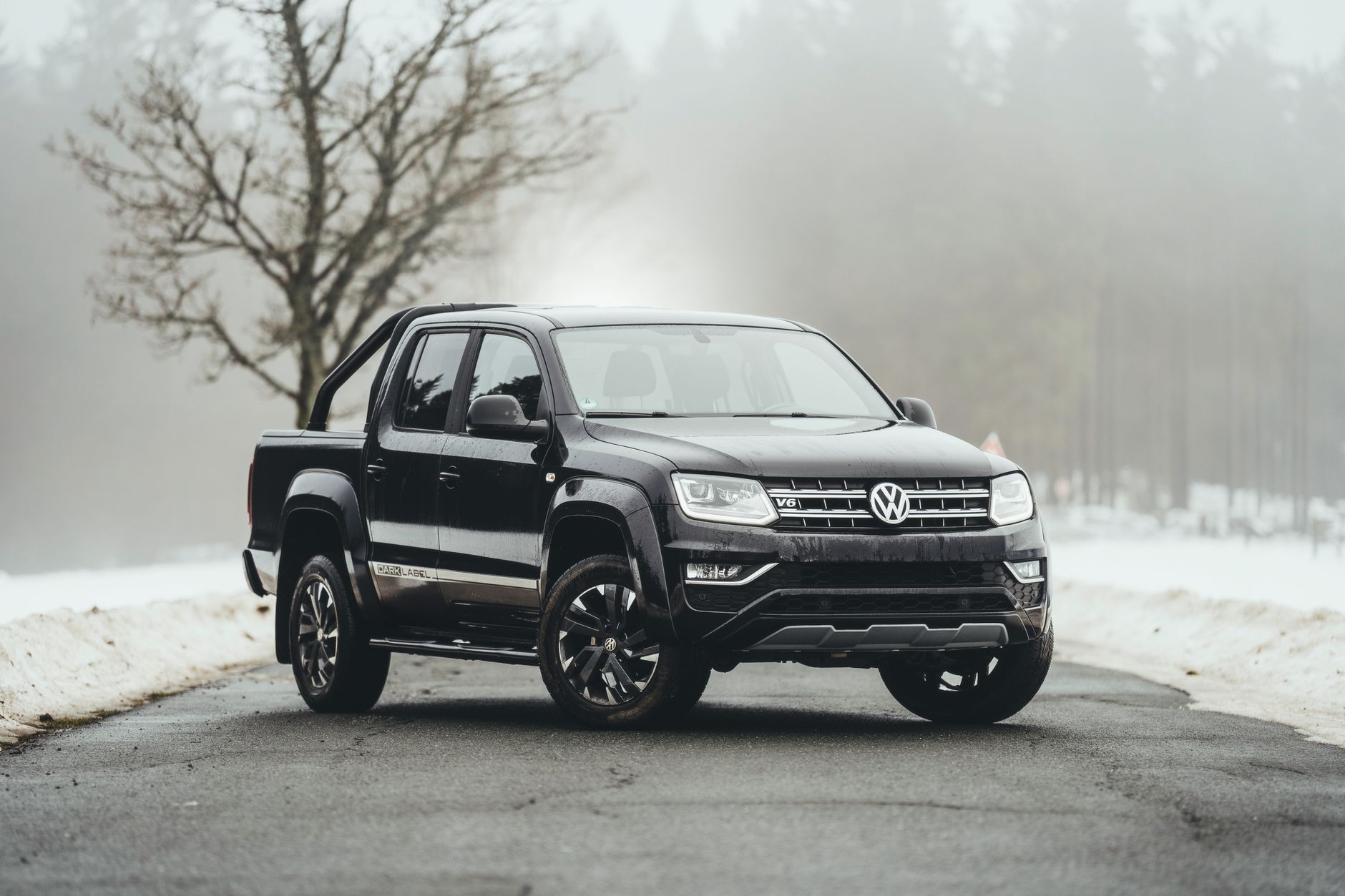
Honda’s uniquely engineered midsize pickup routinely dominates critical rankings by leaning into car-like comfort, challenging America's traditional body-on-frame truck orthodoxy.
The story so far
When evaluating the automotive landscape in the United States, few vehicles present as fascinating a case study in consumer psychology and engineering pragmatism as the Honda Ridgeline. For consecutive years, mainstream automotive analysts and aggregators, including the highly influential U.S. News & World Report rankings, have consistently positioned the Honda Ridgeline at or near the very top of the compact and midsize pickup truck category. It regularly outscores heritage nameplates that sell in vastly higher numbers, earning high marks for its refined ride quality, spacious cabin interior, and clever storage solutions.
Unlike traditional American and Japanese trucks that rely on a heavy, ladder-frame architecture, the Ridgeline is built on Honda's Global Light Truck platform—a unibody construction shared with the family-hauling Honda Pilot SUV and the Odyssey minivan. Currently in its second generation, the vehicle is powered by a naturally aspirated 3.5-liter V6 engine producing 280 horsepower, mated to a nine-speed automatic transmission. It abandons the traditional rear-wheel-drive truck layout for a sophisticated torque-vectoring all-wheel-drive system known as i-VTM4, which can proactively route power to individual rear wheels to maximize traction in adverse weather conditions.
But the defining characteristics of the Ridgeline have always been its unconventional utility features, which capitalize on the space saved by its unibody architecture. The truck bed features a dual-action tailgate that opens both downward and sideways like a door, providing easy access to the vehicle's signature feature: a lockable, weather-tight, 7.3-cubic-foot trunk located entirely beneath the floor of the truck bed. Complete with a drain plug, this hidden compartment routinely serves as an integrated cooler for tailgating or a secure vault for expensive tools, entirely sidestepping the need for bulky aftermarket bed boxes.
Why this matters
The pickup truck is the undisputed king of the American automotive industry, representing the most lucrative segment for domestic automakers like Ford, General Motors, and Stellantis. However, the cultural definition of what constitutes a "real truck" has created a massive disconnect between what American consumers actually need and what they purchase. Industry data routinely suggests that upwards of 70 percent of midsize and half-ton truck owners tow a heavy trailer less than once a year, yet they endure the bouncy, harsh ride of leaf-spring suspensions and solid rear axles on their daily commutes. The Honda Ridgeline matters because it aggressively challenges this inefficiency, proving that a vehicle with a 5,000-pound towing capacity and a 1,583-pound payload rating is more than sufficient to handle the tangible needs of 90 percent of suburban homeowners, weekend warriors, and outdoor enthusiasts.
Editorial analysis
The enduring critical success of the Honda Ridgeline is a triumph of automotive pragmatism over traditional marketing machismo. For decades, truck marketing in the United States has relied on hyper-masculine imagery: dropping boulders into steel beds from great heights, towing massive construction equipment, and conquering punishing desert terrain. The result is a market dominated by the Toyota Tacoma and the Ford F-150, vehicles engineered for extreme durability under severe load, which fundamentally compromises their behaviour when driven unladen on suburban asphalt.
Honda's approach was to invert the engineering equation entirely. By utilizing a fully independent rear suspension rather than a solid rear axle, the Ridgeline delivers a driving dynamic that is virtually indistinguishable from a premium crossover SUV. It corners with stability, absorbs highway expansion joints with grace, and features a cabin that is significantly quieter and more spacious than its direct competitors. Yet, because it does not feature a traditional body-on-frame design or a low-range transfer case for extreme rock crawling, it has historically battled an image problem among truck purists who deride it as a "minivan with the roof chopped off."
However, the broader automotive market is finally bending toward Honda's philosophy. The explosive recent success of cheaper, compact unibody trucks like the Ford Maverick and the Hyundai Santa Cruz has validated the concept of lifestyle utility—the idea that consumers want the convenience of an open bed for dirty cargo, bicycles, or gardening supplies without sacrificing fuel economy or daily driving comfort. The Ridgeline was arguably a decade ahead of its time. As electric trucks like the Rivian R1T and the F-150 Lightning begin to normalize non-traditional truck architectures, the stigma surrounding unibody trucks is rapidly dissolving, leaving the Ridgeline standing not as an outlier, but as a prescient pioneer of the modern lifestyle pickup segment.
What to watch next
As the midsize truck segment undergoes a massive generational shift, industry observers and prospective buyers should closely monitor the following developments:
- Hybridization timelines: With Honda heavily prioritizing hybrid powertrains in the CR-V and Accord, a two-motor hybrid system for the next-generation Ridgeline is highly anticipated to improve urban fuel efficiency.
- Toyota's counter-offensive: The Toyota Tacoma underwent a massive redesign for the 2024 model year, finally introducing a coil-spring rear suspension to improve ride quality. How the Ridgeline's sales respond to a more refined primary rival will be critical.
- EV platform transitions: Watch for announcements regarding Honda's upcoming "0 Series" electric vehicle architecture and whether a battery-electric lifestyle truck is in the development pipeline for the North American market.
- Pricing pressures: As compact trucks like the Ford Maverick capture the sub-$30,000 market, Honda will need to clearly justify the Ridgeline's premium pricing tier through enhanced technology and interior luxury.
For global readers
To international observers, and particularly the South Asian diaspora, the American obsession with massive pickup trucks can be sociologically baffling. In India, for example, the pickup truck is almost exclusively categorized as a commercial "goods carrier"—typified by agricultural and industrial workhorses like the Tata Ace or the Mahindra Bolero Camper. Personal utility and status are traditionally projected through large, enclosed SUVs like the Toyota Fortuner. The concept of an affluent software engineer in Bangalore or Hyderabad commuting to an office park in an open-bed truck is virtually nonexistent. For immigrant professionals integrating into American car culture, the Honda Ridgeline serves as the ultimate transitional vehicle. It provides the legendary reliability and quiet refinement expected from a premium Asian automaker, while quietly adopting the mandatory American utility aesthetic. It is the sensible, analytical solution to the uniquely American desire to own a pickup truck.
The bottom line
The Honda Ridgeline remains the most intelligently packaged midsize truck on the American road, successfully trading extreme, rarely-used towing capacities for everyday drivability and innovative storage. For consumers willing to bypass traditional automotive tribalism and honestly assess their actual daily driving habits, it stands as an unparalleled blend of SUV comfort and utilitarian capability.
Key Takeaways
- The Honda Ridgeline consistently tops U.S. News & World Report and other critical rankings due to its comfortable ride and intelligent packaging.
- Unlike traditional body-on-frame trucks, the Ridgeline uses a unibody platform shared with the Honda Pilot, resulting in superior daily driving dynamics.
- Features like a lockable in-bed trunk and a dual-action tailgate highlight Honda's focus on practical lifestyle utility over extreme agricultural hauling.
- The success of newer compact unibody trucks like the Ford Maverick proves that Honda's original vision for a crossover-truck hybrid was ahead of its time.
- For international buyers and the global diaspora, the Ridgeline offers a sensible bridge between familiar premium SUV comfort and American truck culture.
Frequently asked questions
What makes the Honda Ridgeline different from a Toyota Tacoma?
The Ridgeline uses a unibody construction and independent rear suspension, making it drive much like a crossover SUV with superior comfort. The Tacoma uses a traditional body-on-frame design, which is better for extreme off-roading and heavy towing but results in a harsher daily ride.
How much can the Honda Ridgeline tow?
The current generation of the Honda Ridgeline has a maximum towing capacity of 5,000 pounds when properly equipped, which is sufficient for most medium-sized boats, campers, and utility trailers.
Is the Honda Ridgeline's in-bed trunk waterproof?
Yes, the 7.3-cubic-foot trunk located beneath the floor of the bed is weather-tight and lockable. It also features a drain plug, allowing it to be filled with ice and used as a cooler.
- 01Road & Track: Tested: 2027 Mercedes-Maybach S580 Combines Ultra-Luxury with Surprising Value
- 02The Verge: Xbox is a disaster
- 03Wired: Good News! Turns Out the Earth Will Never Be Swallowed by the Sun
- 04CNET: Win a New Apple Watch as CNET Guessing Game: Apple Edition Returns for Round Two
This editorial article was written by US News Desk's editorial desk using current reporting from the publishers above. All facts were grounded against these sources.